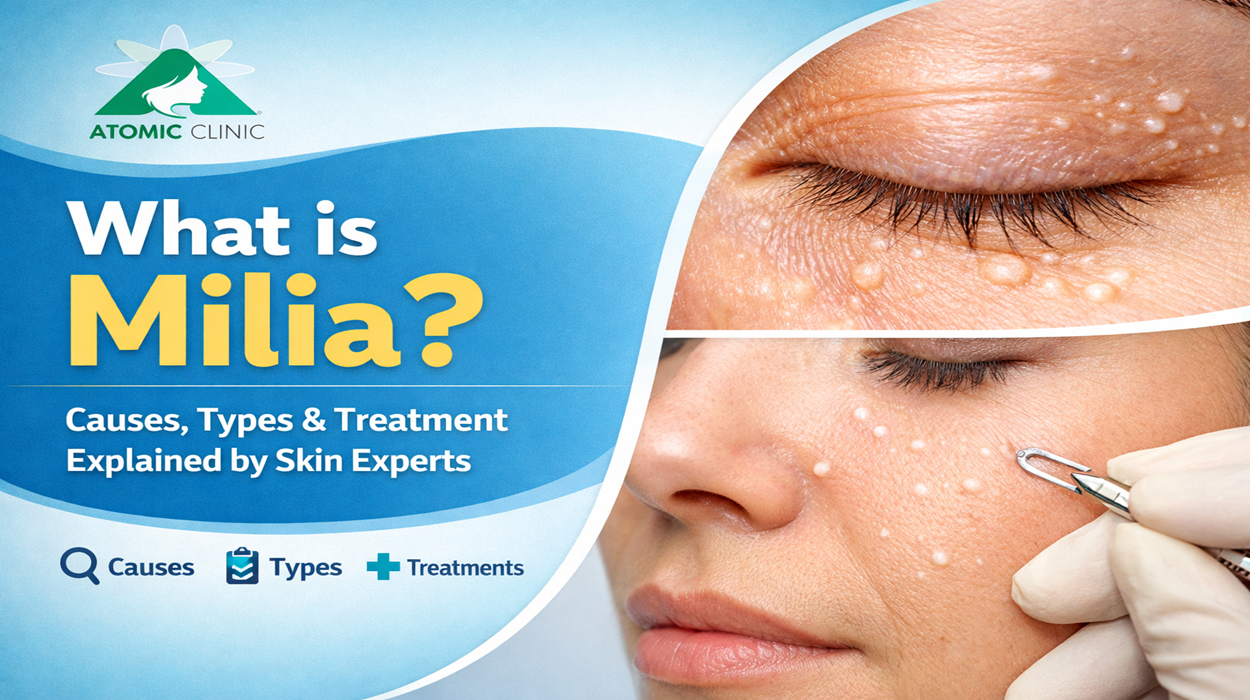
What is Milia? Causes, Types & Treatment Explained by Skin Experts

If you’ve ever noticed tiny white bumps on your face—especially around your eyes or cheeks—that just don’t go away no matter what you apply, you’re not alone. Many people mistake them for whiteheads or acne, but in reality, they could be milia.
At Atomic Clinic, we regularly meet patients who are frustrated because these stubborn bumps don’t respond to usual skincare routines. The good news? Milia is completely harmless—and treatable when handled the right way.
Let’s break it down in a simple, practical way.
What is Milia?
Milia (singular: milium) are small, white or yellowish bumps that appear on the skin. They form when keratin (a type of skin protein) gets trapped beneath the surface instead of shedding naturally.
Unlike acne:
- They are not caused by bacteria
- They don’t have pores or openings
- They don’t respond to typical acne treatments
These bumps are most commonly seen:
- Around the eyes
- On the cheeks
- On the nose and forehead
They can appear in both adults and newborns, though the causes may differ.
What Causes Milia?
Understanding the cause is important because it helps prevent recurrence.
1. Dead Skin Buildup
When dead skin cells don’t shed properly, they can trap keratin under the skin, leading to milia formation.
2. Heavy Skincare Products
Using thick creams, oily moisturizers, or pore-clogging cosmetics—especially around the eyes—can increase the chances of milia.
3. Sun Damage
Long-term sun exposure can make the skin thicker and less efficient at natural exfoliation, which contributes to milia.
4. Skin Trauma
Procedures, burns, rashes, or even aggressive facials can sometimes trigger milia as the skin heals.
5. Improper Skincare Routine
Overuse of actives or lack of exfoliation can both disrupt the skin cycle, leading to these tiny cysts.
Types of Milia
Not all milia are the same. Based on how and why they appear, they are categorized into different types:
1. Primary Milia
These develop naturally without any clear trigger. Common in both children and adults.
2. Secondary Milia
These occur after skin damage such as burns, blistering, or cosmetic procedures.
3. Neonatal Milia
Seen in newborn babies. These usually resolve on their own within a few weeks.
4. Milia en Plaque
A rare form where multiple milia appear in a patch, often linked to underlying skin conditions.
5. Multiple Eruptive Milia
When clusters of milia suddenly appear over a larger area, often on the face or upper body.
Milia vs Whiteheads: Know the Difference
This is where many people go wrong.
| Feature | Milia | Whiteheads |
|---|---|---|
| Cause | Trapped keratin | Clogged pores (oil + bacteria) |
| Appearance | Hard, white bumps | Soft, pus-filled bumps |
| Extraction | Requires professional removal | Can sometimes be extracted |
| Treatment | Dermatological methods | Acne treatments |
If you try to treat milia like acne, you’ll likely see no results—or worse, irritation.
Can Milia Go Away on Its Own?
In some cases—especially in newborns—milia can disappear without treatment.
However, in adults:
- They tend to stay for months or even years
- They usually don’t resolve with home remedies
- Picking or squeezing can lead to scarring or infection
That’s why proper evaluation and treatment matter.
Effective Milia Treatments (Dermatologist-Recommended)
At Atomic Clinic, we focus on treatments that are safe, precise, and skin-friendly.
1. Professional Extraction
A trained skin expert uses sterile tools to gently remove the trapped keratin. This is the most immediate and effective solution.
2. Chemical Peels
Mild peels help exfoliate the top layer of skin, preventing new milia from forming and improving overall texture.
3. Laser Treatments
In selected cases, advanced laser techniques can be used for stubborn or recurring milia.
4. Medical-Grade Skincare
Prescription-based creams (like retinoids) may be advised to regulate skin turnover and reduce recurrence.
What Not to Do
Many people worsen their skin by trying quick fixes. Avoid:
- ❌ Squeezing or pricking at home
- ❌ Using harsh scrubs near delicate areas
- ❌ Applying heavy creams around the eyes
- ❌ Following random DIY remedies from the internet
These can lead to irritation, pigmentation, or permanent marks.
How to Prevent Milia
Prevention is all about maintaining a balanced skincare routine:
- Use lightweight, non-comedogenic moisturizers
- Add gentle exfoliation (as per skin type)
- Always apply sunscreen to prevent skin thickening
- Avoid over-layering heavy products
- Get professional skin clean-ups when needed
Consistency matters more than experimenting with too many products.
When Should You Visit a Skin Clinic?
You should consider professional help if:
- Milia is not going away for months
- It’s increasing in number
- It’s affecting your confidence
- You’re unsure whether it’s milia or something else
At Atomic Clinic, every treatment starts with a proper skin assessment so that you don’t waste time or money on ineffective solutions.
Final Thoughts
Milia may look small, but they can be stubborn and confusing if you don’t understand them properly. The key is to avoid self-treatment and follow a guided approach based on your skin type.
With the right care and expert support, milia can be treated safely without damaging your skin.
Book Your Consultation at Atomic Clinic
If you’re dealing with persistent white bumps and want clear, smooth skin again, our experts at Atomic Clinic are here to help.
Get a personalized skin assessment
Safe, dermatologist-guided treatment
Visible results without skin damage
Book your appointment today and take the first step towards healthier skin.