Why Does My Face Get Oily Again After Washing? A Dermatologist Explains

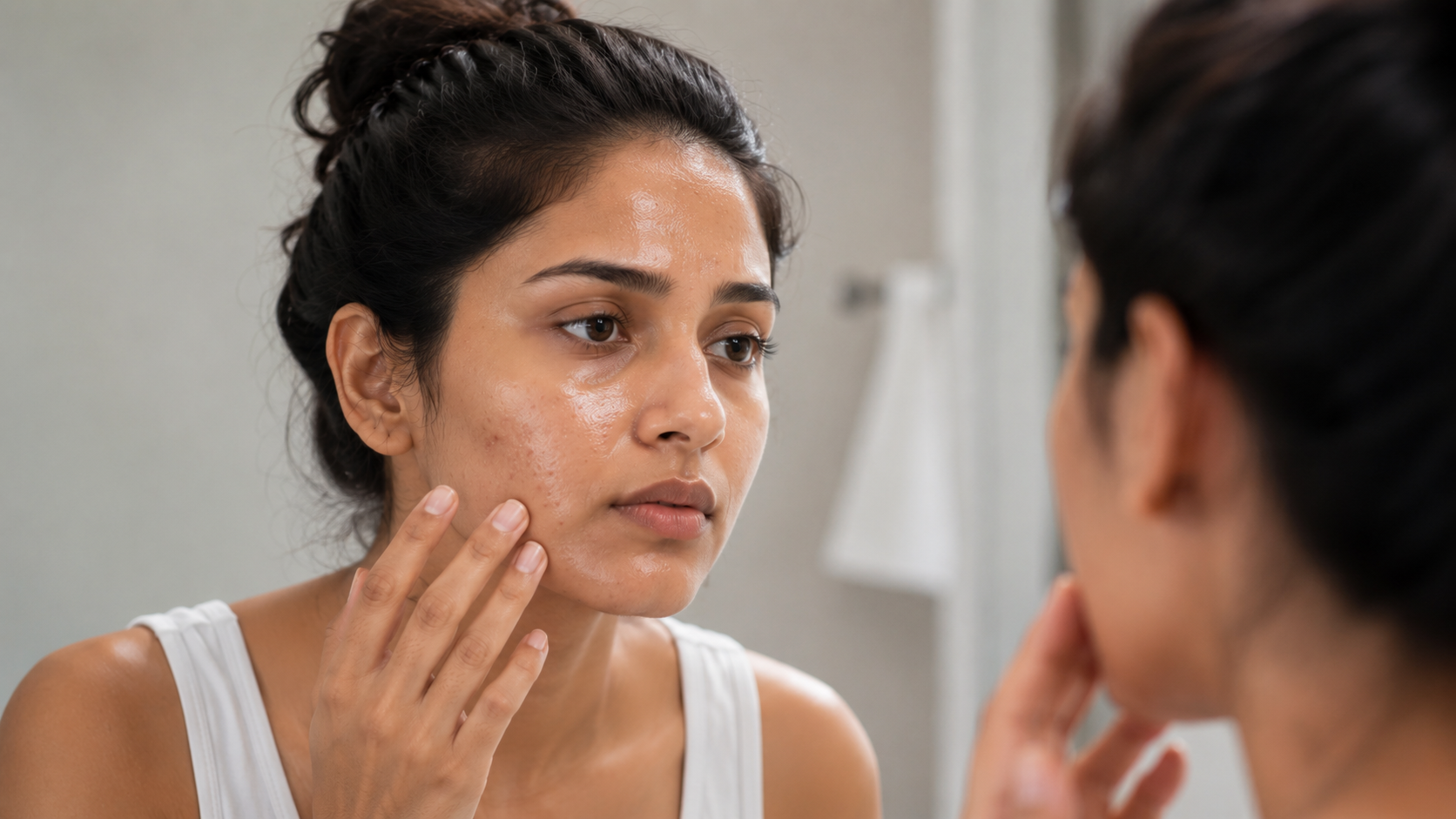
You wash your face in the morning and step out feeling fresh. But by lunchtime — forehead shining, nose sticky — the oiliness is back. Sound familiar?
At Atomic Clinic, this is one of the most common skin concerns we hear, especially during Varanasi’s hot and humid summers. And the answer surprises most people: the oiliness is often caused by the very things you’re doing to stop it.
What Is Sebum and Why Does Your Skin Produce It?
Your skin naturally produces an oil called sebum through tiny glands beneath the surface. Sebum is not the enemy — it protects your skin barrier and keeps it from drying out. The problem starts when sebum production becomes excessive.
In a city like Varanasi, where heat, humidity, dust, and pollution combine year-round, oily skin can feel relentless. But weather is only part of the story.
5 Reasons Your Face Gets Oily Again Within Hours of Washing
1. You’re Washing Your Face Too Often
Many people with oily skin wash their face 4–5 times a day thinking it will fix the problem. In reality, overwashing strips away your skin’s natural moisture. When that happens, your oil glands respond by producing even more sebum to compensate.
The cycle looks like this:
Skin feels oily → You wash aggressively → Skin becomes internally dry → Oil glands go into overdrive → Skin feels oily again
Washing twice a day — once in the morning and once at night — is the ideal frequency for most skin types.
2. Your Face Wash Is Too Harsh
Face washes marketed for “oily skin” often contain strong stripping agents that leave skin feeling very tight and dry after use. Many people mistake that tight feeling for cleanliness — but it’s actually a warning sign.
Healthy skin should never feel stretched or uncomfortable after washing. If it does, your skin barrier is being damaged, and your oil glands will respond by ramping up production within hours.
A gentle, pH-balanced cleanser works far better in the long run for oily skin management.
3. You’re Skipping Moisturizer
One of the most common myths we hear at our clinic: “My skin is already oily, so I don’t need moisturizer.”
This is incorrect. Oily skin still needs hydration. When the skin is dehydrated (a different condition from being oily), it compensates by producing more oil. Adding a lightweight, non-comedogenic, oil-free moisturizer can actually reduce oiliness over time by stopping this overcompensation cycle.
4. Stress, Sleep, and Hormones Are Playing a Role
Skincare products aren’t always the issue. Hormonal fluctuations, chronic stress, poor sleep, and dietary habits all directly affect sebum production.
Many patients notice sudden breakouts and increased oiliness during exam season, work pressure, or irregular sleep cycles — without making any changes to their skincare routine. Sugary foods, junk food, and dehydration can also worsen oily skin.
5. Varanasi’s Climate Is Working Against You
During the hot and humid months in Varanasi, your skin naturally sweats more. This sweat mixes with sebum and creates the perfect environment for dust, pollution, and bacteria to stick to your skin — leading to clogged pores, blackheads, and acne.
People who commute on bikes, spend long hours outdoors, or work in dust-heavy environments experience this more intensely. Summer in Varanasi is a particularly challenging season for oily and acne-prone skin.
What Actually Helps: A Simple, Balanced Routine
Managing oily skin is about balance — not extreme measures. A minimal, consistent routine typically outperforms aggressive treatment every time.
What we recommend at Atomic Clinic:
- Wash your face twice daily with a gentle, sulfate-free cleanser
- Apply a lightweight, oil-free moisturizer — don’t skip this step
- Use non-comedogenic skincare and makeup products
- Apply broad-spectrum sunscreen every morning (yes, even with oily skin)
- Drink enough water and maintain a balanced diet
- Avoid touching your face repeatedly throughout the day
- Prioritise 7–8 hours of sleep and manage stress where possible
And importantly — stop experimenting with a new product every week. Constantly switching products disrupts your skin barrier and prevents any routine from working properly. Many patients damage their skin this way after seeing social media recommendations.
When Should You See a Dermatologist?
Home routines work well for mild oiliness, but some situations need professional guidance. If your oily skin is accompanied by:
- Frequent or painful acne breakouts
- Deep cystic pimples
- Visible post-acne marks or pigmentation
- Enlarged or congested pores
- Persistent redness or irritation
…then it’s time to consult a dermatologist rather than rely on home remedies or internet advice. Every skin type is different, and a personalised treatment plan makes a significant difference.
Frequently Asked Questions About Oily Skin
Q: Is oily skin a sign that my skin is dirty? No. Oily skin is a result of overactive sebaceous glands — it is a skin type, not a hygiene issue. Over-washing in response can actually make it worse.
Q: How many times should I wash my face if I have oily skin? Twice a day is ideal — once in the morning and once before bed. If you’ve been sweating heavily, a gentle rinse with plain water in between is fine.
Q: Does oily skin need sunscreen? Absolutely. Sunscreen is non-negotiable for all skin types. Look for oil-free, non-comedogenic formulas labelled “matte” or “for oily/combination skin” to avoid adding greasiness.
Q: Can oily skin go away on its own? Oily skin often improves with age as hormone levels stabilise. However, without proper care, it can lead to persistent acne, enlarged pores, and pigmentation that requires clinical treatment.
Q: What’s the difference between oily skin and dehydrated skin? Oily skin produces excess sebum. Dehydrated skin lacks water in the skin cells — and surprisingly, your skin can be both oily and dehydrated at the same time. This is very common in Varanasi’s climate and is often why moisturiser is still necessary for oily skin types.
Final Thoughts
If your face turns oily just a few hours after washing, the problem is rarely that your skin is too dirty. In most cases, it’s reacting to overcleansing, harsh products, stress, weather conditions, or a lack of proper hydration balance.
Understanding your skin — rather than fighting it — makes all the difference.
If you’re struggling with persistent oily skin, acne, or related concerns, our team at Atomic Clinic, Varanasi, is here to help with a personalised assessment and treatment plan designed for your specific skin type and lifestyle.
Book a Consultation at Atomic Clinic → Serving patients across Varanasi from our centres in Sunderpur and Varuna