Hydrafacial vs Regular Facial: What’s the Difference?

Facials have been part of skincare routines for years. A traditional facial at a salon or skin clinic may involve cleansing, exfoliation, massage, a face mask and sometimes extraction. Hydrafacial follows a different approach, using a specialised device to combine cleansing, exfoliation, extraction and hydration.
Both treatments can make the skin feel cleaner and look fresher, but they aren’t interchangeable.
So, if you’re deciding between a Hydrafacial and a regular facial, what should you know?
What Is a Regular Facial?
A regular facial is a broad term rather than one specific treatment.
Depending on the type of facial, the session may include:
- Cleansing
- Exfoliation
- Steam
- Manual extraction
- Facial massage
- Face mask
- Moisturising products
The products and techniques can vary considerably between clinics and salons. A facial designed for dry skin won’t necessarily follow the same steps as one intended for oily or congested skin.
For many people, a regular facial is as much about relaxation as skincare. The massage, mask and hands-on treatment can make it a pleasant way to spend some time caring for the skin.
What Is a Hydrafacial?
Hydrafacial is a device-based facial treatment that combines several skincare steps in one session.
The treatment generally includes cleansing and exfoliation, followed by pore cleansing and hydration. Specialised equipment is used during the treatment rather than relying entirely on manual techniques.
The exact procedure can vary depending on the equipment, products and treatment protocol used by the clinic.
One reason Hydrafacial has become popular is that several different steps are brought together in a single treatment. Instead of having separate appointments for cleansing, exfoliation and hydration, these stages can form part of the same session.
Hydrafacial vs Regular Facial: What’s the Main Difference?
The biggest difference is the way the treatment is performed.
A traditional facial is primarily hands-on. The professional uses skincare products and techniques such as massage, exfoliation, extraction and masks.
Hydrafacial uses specialised equipment for key parts of the treatment. It combines cleansing, exfoliation, pore cleansing and hydration in a structured process.
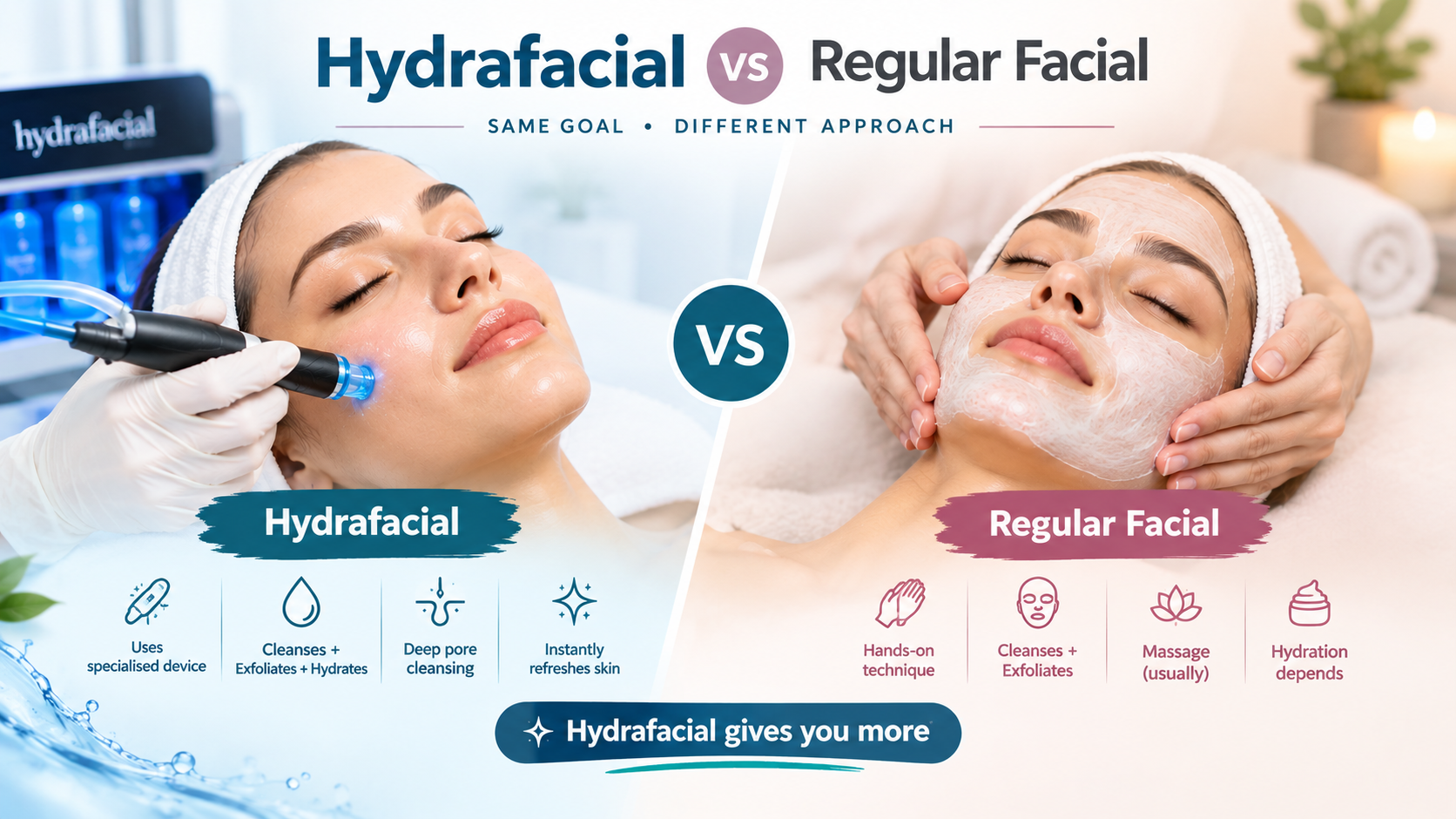
Here’s a simple comparison:
Hydrafacial | Regular Facial |
Uses specialised equipment | Mainly hands-on treatment |
Includes cleansing and exfoliation | Usually includes cleansing and exfoliation |
Includes a pore-cleansing/extraction stage | Extraction may be included |
Hydration is part of the treatment | Hydration depends on the facial |
Usually less focused on massage | Massage is commonly included |
Treatment can be customised | Depends on the type of facial |
The important point is that neither treatment is automatically better for everyone.
Which Treatment Is Better for Clogged Pores?
If blackheads and clogged pores are your main concern, the type of facial matters.
A regular facial may include manual extraction. This can help remove some surface congestion, although aggressive extraction can leave the skin irritated.
Hydrafacial uses specialised equipment during the pore-cleansing stage. This can be appealing to people who regularly notice congestion around the nose, chin or forehead.
However, clogged pores don’t disappear permanently after one treatment. Oil production, dead skin cells, skincare products and everyday habits continue to affect the skin.
If blackheads keep coming back, it’s worth looking at your regular skincare routine rather than relying only on repeated extractions.
What About Dry or Dehydrated Skin?
This is another area where Hydrafacial and regular facials can overlap.
A traditional facial may use moisturising creams, masks or other products intended to make dry skin feel softer and more comfortable.
Hydrafacial includes a hydration stage, making it an option for people whose skin looks dull or feels dehydrated.
There’s a difference between dry and dehydrated skin, though.
Dry skin generally lacks oil, while dehydrated skin lacks water. A person can have oily skin and still experience dehydration.
That’s why simply choosing a facial labelled “hydrating” isn’t always enough. Understanding what your skin actually needs is more useful.
Can Hydrafacial Help With Dull Skin?
Both treatments can make dull-looking skin appear fresher.
Exfoliation removes some of the dead skin cells sitting on the surface. Once that buildup is reduced, the skin can look smoother and more even.
Hydrafacial combines exfoliation with cleansing and hydration, which can give the skin a fresh appearance after treatment.
A regular facial can create a similar short-term effect, depending on the products and techniques used.
Neither treatment should be viewed as a permanent solution for dullness. Sun exposure, dehydration, lack of sleep, unsuitable skincare and certain skin conditions can all contribute to a tired-looking complexion.
Is Hydrafacial Suitable for Acne-Prone Skin?
This depends on the condition of the skin.
Hydrafacial may be considered for skin with congestion and clogged pores. But active, inflamed acne is different.
When pimples are painful, swollen or irritated, additional exfoliation or manipulation may not be appropriate. The same caution applies to traditional facials involving aggressive extraction.
If acne is persistent, getting the underlying condition assessed is more useful than repeatedly booking facials.
A facial can form part of a skincare routine for some people, but it shouldn’t replace appropriate acne treatment.
Which Facial Is More Relaxing?
If relaxation is high on your list, a regular facial may be more appealing.
Traditional facials often include facial massage, a mask and several hands-on steps. For many people, that’s an enjoyable part of the experience.
Hydrafacial is more treatment-oriented. The focus is on cleansing, exfoliation, pore care and hydration rather than massage.
So the better option depends partly on what you want from the appointment.
If you want to relax and enjoy a traditional facial experience, a regular facial may be enough.
If your priority is cleansing and hydration, you may prefer a device-based treatment such as Hydrafacial.
Can People With Sensitive Skin Have a Hydrafacial?
Sensitive skin doesn’t automatically mean that facial treatments are off-limits.
However, the current condition of the skin matters.
If your skin is sunburned, peeling, irritated or experiencing a flare-up, exfoliation and extraction may not be appropriate at that time.
The products used during treatment matter too. Some active ingredients may be unsuitable for particularly sensitive skin.
Before having a Hydrafacial or any other facial, tell the practitioner about existing skin concerns, allergies, medications and skincare products you’re using.
How Long Do the Results Last?
Neither Hydrafacial nor a regular facial produces permanent results.
After treatment, the skin may feel smoother and cleaner. It may also look more hydrated and refreshed.
Over time, however, normal oil production, dead skin cell buildup, sun exposure and daily habits affect the skin again.
Your everyday skincare routine still matters.
Using sunscreen, cleansing gently and keeping the skin moisturised can help maintain healthier-looking skin between professional treatments.
How Often Should You Have a Facial?
There isn’t one schedule that works for everyone.
Someone with relatively uncomplicated skin may only want an occasional facial before an event or when their skin needs some extra attention.
Others may choose professional treatments more regularly.
The frequency should take into account your skin type, current concerns and the treatment being performed. More frequent treatment isn’t necessarily better, particularly if the skin is sensitive or already irritated.
A professional can help you work out a sensible schedule rather than simply following a fixed timetable.
Hydrafacial or Regular Facial: Which One Should You Choose?
Think about what you’re trying to achieve.
A regular facial may be a good fit when you want:
- A relaxing skincare treatment
- Facial massage
- Basic cleansing and exfoliation
- A moisturising or nourishing treatment
- General skin maintenance
Hydrafacial may be worth considering when you’re interested in:
- Machine-assisted cleansing
- Exfoliation
- Pore cleansing
- Hydration
- A treatment that combines several steps in one session
There are also situations where neither should be your first choice. Persistent acne, severe irritation, unexplained redness or other skin problems may need professional assessment before you have a cosmetic facial.
What Should You Ask Before Booking?
Don’t be afraid to ask exactly what the treatment includes.
A few useful questions are:
What steps will be performed during the treatment?
Which products will be applied?
Is the treatment suitable for my current skin condition?
Do I need to stop any skincare products beforehand?
What should I avoid after the treatment?
These questions can help you understand what you’re actually paying for rather than choosing a treatment based only on its name.
The Bottom Line
Hydrafacial and regular facials have some similarities, but they’re not the same treatment.
A regular facial usually combines hands-on techniques such as cleansing, exfoliation, massage, masks and sometimes extraction.
Hydrafacial uses specialised equipment to combine cleansing, exfoliation, pore care and hydration.
If your main goal is relaxation and routine skincare, a traditional facial may be enough. If you’re interested in a device-based treatment that combines several skincare steps, Hydrafacial may be something to discuss with a qualified professional.
Your skin should ultimately guide the decision. A popular treatment isn’t necessarily the right treatment for every face.