

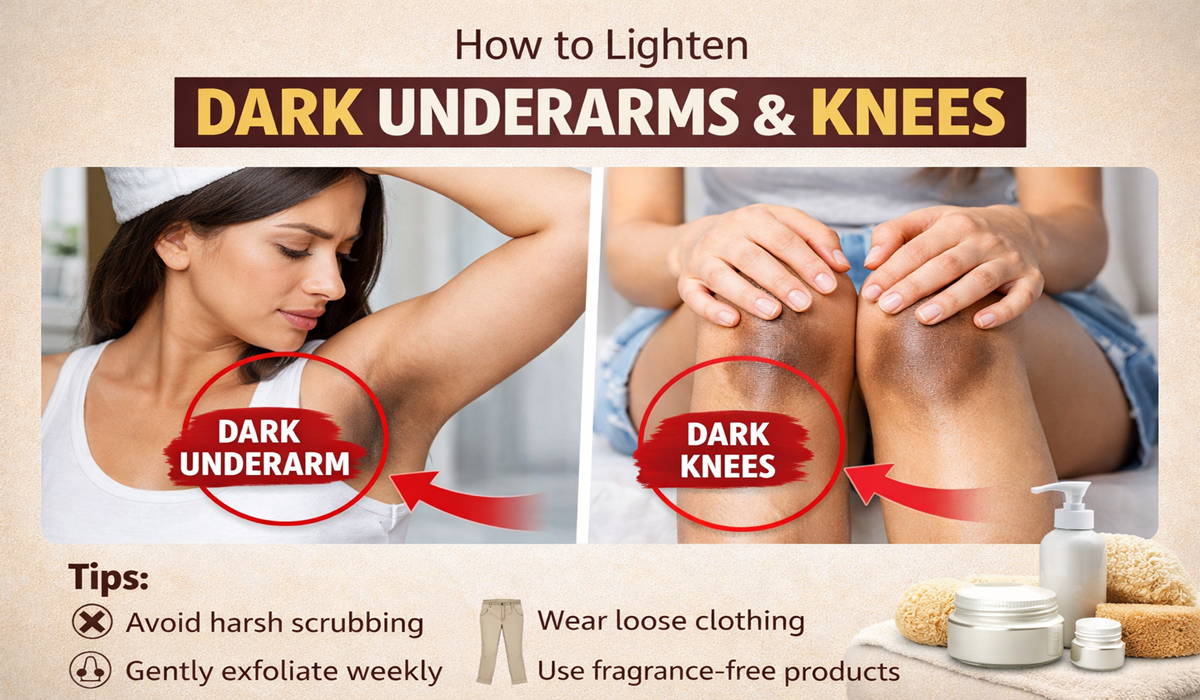
How to Deal with Underarm Darkness and Knee Darkness

Darkening of the underarms and knees is a common concern, but it often becomes frustrating when it does not improve despite regular care. Many people assume it is simply due to poor hygiene, but in reality, the reasons are usually more complex.
This type of pigmentation develops gradually. It may start as a slight change in tone and, over time, become more noticeable. The key to dealing with it effectively is understanding the cause and avoiding practices that may worsen the condition.
Why do Underarms and Knees become dark?
Before focusing on treatment, it is important to understand why this happens in the first place.
One of the most common reasons is friction. Areas like the underarms and knees are constantly exposed to rubbing—whether from clothing, body movement, or daily activities. Over time, this repeated friction can lead to thickened skin and uneven pigmentation.
Another factor is the use of unsuitable products. Deodorants, creams, or even soaps that do not suit your skin type can irritate the skin. This irritation may not be immediately visible, but with continued use, it can lead to gradual darkening.
In some cases, hormonal changes also play a role. When pigmentation appears suddenly or spreads quickly, it may be linked to internal changes in the body rather than just external factors.
Lastly, dead skin build-up is often overlooked. When these areas are not exfoliated properly, layers of dead skin accumulate, making the skin appear dull and darker than usual.
Start with gentle and consistent care
The first step in managing pigmentation is to treat the skin gently.
A common mistake is to scrub the area aggressively in an attempt to remove the darkness quickly. This approach usually backfires. Harsh scrubbing irritates the skin and can deepen pigmentation instead of improving it.
Instead:
- Use a mild cleanser suitable for sensitive skin
- Clean the area regularly, but avoid over-cleansing
- Treat the skin with care rather than force
Consistency with a simple routine is far more effective than harsh, short-term measures.
Reduce friction wherever possible
Since friction is a major contributing factor, reducing it can significantly help.
- Choose loose, breathable fabrics instead of tight clothing
- Avoid materials that feel rough against the skin
- Pay attention to repetitive movements that may cause rubbing
Even small changes in daily habits can reduce stress on the skin and prevent further darkening.
Be mindful of the products you use
Using the right products is crucial.
If you notice that your skin started darkening after using a particular deodorant or cream, it is best to stop using it. Give your skin some time to recover and switch to milder, fragrance-free options.
Avoid the habit of constantly trying new products. What works for someone else may not work for you, and frequent changes can confuse and irritate the skin.
Add gentle exfoliation to your routine
Exfoliation helps remove dead skin cells, but it must be done carefully.
- Limit exfoliation to once or twice a week
- Use mild exfoliating products rather than harsh scrubs
- Avoid over-exfoliating, as it can damage the skin barrier
The goal is gradual improvement, not immediate results.
Keep the skin hydrated and healthy
Hydration plays a bigger role than most people realize.
Dry skin tends to look dull and uneven. Regular use of a light, non-irritating moisturizer can help maintain the skin barrier and improve overall texture.
Apply moisturizer after bathing, when the skin is slightly damp, to lock in moisture effectively.
Avoid common mistakes
Many people unknowingly make mistakes that worsen pigmentation.
- Over-scrubbing the skin
- Using harsh home remedies like lemon or baking soda
- Layering multiple products at once
- Expecting instant results
These practices can irritate the skin and lead to further darkening. It is important to stay patient and avoid reacting impulsively to the problem.
When should you seek professional help?
Sometimes, home care is not enough.
If you notice that:
- The darkness is increasing rapidly
- The pigmentation has been present for a long time
- There is no improvement despite proper care
It is advisable to consult a professional.
In clinical settings like Atomic Clinic, the first step is to identify the root cause. Based on the assessment, treatment may involve topical solutions or dermatology-based procedures such as chemical peels or other targeted treatments.
Professional guidance ensures that the treatment is safe and suited to your specific condition.
Understanding treatment and expectations
It is important to have realistic expectations.
Pigmentation does not develop overnight, and it does not fade overnight either. The time required for improvement depends on how deep the pigmentation is and what caused it.
Mild cases may respond well to routine changes and proper skincare. More stubborn pigmentation may require structured treatments under professional supervision.
In both cases, consistency is key. Skipping routines or frequently changing products can delay results.
Simple habits that make a difference
Making small adjustments in your daily routine can help prevent and manage darkening:
- Wear comfortable, non-restrictive clothing
- Stick to a simple and consistent skincare routine
- Avoid experimenting too much with products
- Pay attention to early signs instead of ignoring them
These habits may seem basic, but they play a significant role in maintaining healthy skin.
Final thought
Underarm and knee darkness is a manageable concern, but it requires the right approach. Treating it as a quick-fix problem often leads to disappointment and, in some cases, further damage.
The skin usually reflects what it is experiencing—whether it is friction, irritation, or internal imbalance. Once you understand the underlying cause, managing the condition becomes much easier.
With patience, consistency, and the right guidance, it is possible to gradually improve skin tone without harming the skin in the process.