
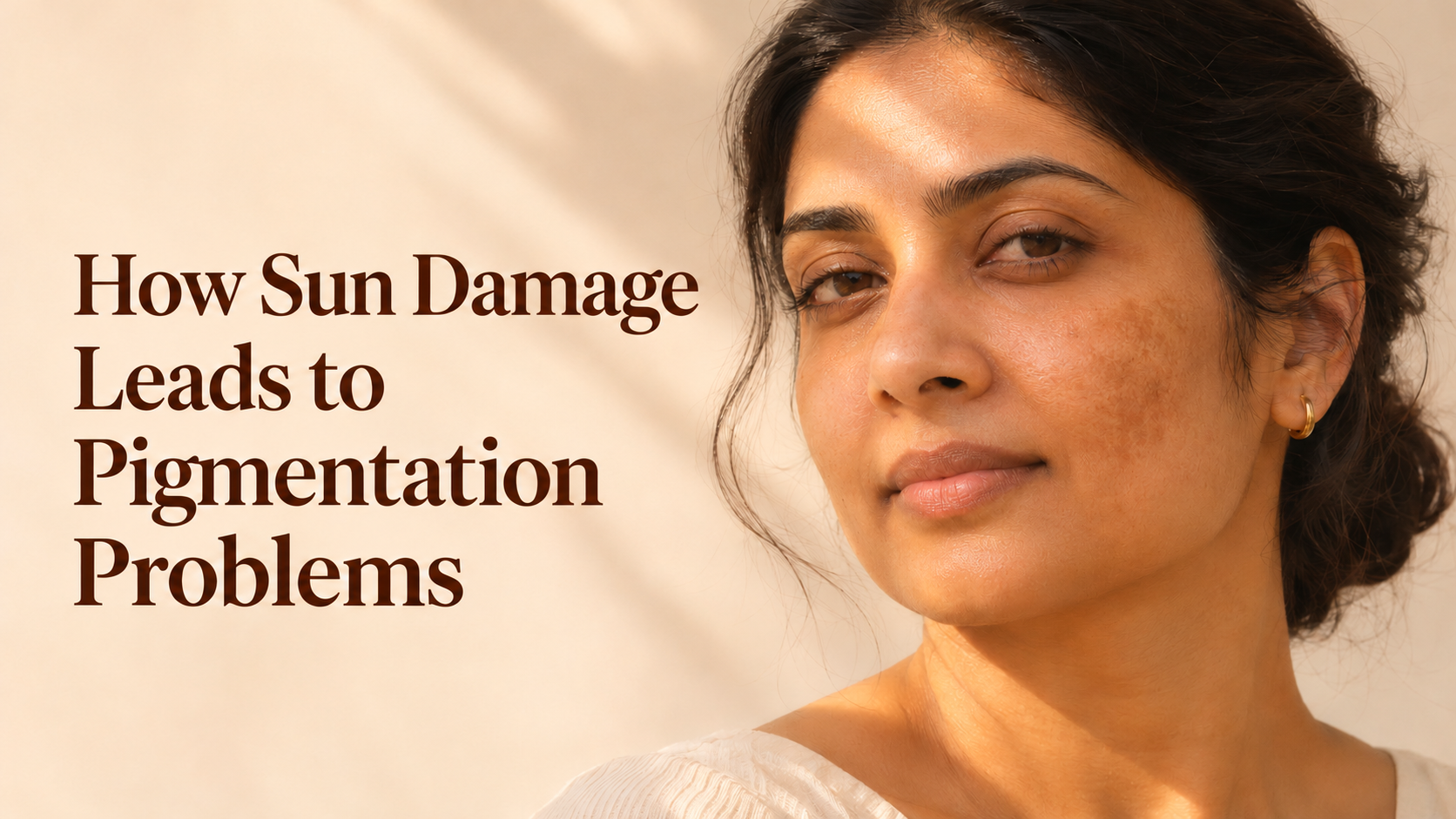
How Sun Damage Leads to Pigmentation Problems

You might first notice it in a photograph: a brown patch on your cheek, a darker forehead or a spot that seems more noticeable than it was last year. Sometimes the change follows a holiday. Sometimes it appears gradually, without a sunburn you can remember.
Sun exposure is a common contributor to uneven pigmentation. It can encourage new dark spots and deepen marks that were already there. But not every brown patch is the same condition, and treating them all with the same brightening cream can lead to disappointment.
Understanding how sunlight affects pigment—and identifying the kind of pigmentation you have—helps you choose a sensible approach.
What Happens When Sunlight Reaches Your Skin?
Your skin contains pigment-producing cells called melanocytes. These make melanin, the pigment that contributes to your natural skin colour. Sun exposure can stimulate increased pigment production, which is why skin may darken after time outdoors.
Repeated exposure also damages skin cells. Over time, that damage can become visible as uneven colour, freckles, age spots and other changes. You do not need to experience a dramatic sunburn for sun damage to accumulate.
A tan should therefore not be treated as proof that your skin has adapted safely to the sun. It is a response to exposure, and it does not replace sun protection.
Why Pigmentation Can Become Uneven
You may wonder why your whole face does not simply darken evenly. Different areas can have different histories of sun exposure, inflammation and existing pigment changes.
An old acne mark may become more noticeable while the skin around it looks relatively unchanged. A person with melasma may find that patches across the cheeks or forehead deepen after time outdoors. Someone else may gradually develop separate brown spots on frequently exposed areas.
These patterns matter because “pigmentation” describes a visible change, rather than one diagnosis. Sunlight can contribute to several conditions, but their treatment and likelihood of returning are not identical.
Sunspots and Age Spots
Sunspots, often called age spots or solar lentigines, are flat areas of darker colour that commonly develop on sun-exposed skin. They may become more noticeable with age and accumulated exposure.
Despite the name, an “age spot” should not be diagnosed simply by looking at someone’s age. Other skin growths can resemble these spots, including some that need medical attention.
If you have a new or changing mark, have it assessed before trying to fade it. A dermatologist can confirm whether it is a harmless sunspot and discuss suitable treatment. This is particularly useful before booking a cosmetic procedure that could alter the spot’s appearance.
Melasma: When Sunlight Deepens Patches
Melasma usually appears as patches of brown or grey-brown pigmentation, often on the face. Sunlight can stimulate more pigment, making existing patches darker or contributing to new ones.
This can be frustrating when a treatment appears to work, only for the patches to become noticeable again after outdoor exposure. It does not necessarily mean the treatment was ineffective. Melasma often needs ongoing management, with sun protection remaining part of the routine after improvement.
Treatment may involve prescription creams or other carefully selected options. A clinician should assess the condition before recommending a plan, particularly if you have already tried several products without success.
Why Acne Marks Can Look Darker After Sun Exposure
A spot may heal but leave a flat brown mark behind. Similar marks can follow eczema, irritation or another inflammatory skin problem. This is called post-inflammatory hyperpigmentation.
Sunlight can darken these areas, making a fading mark appear more prominent again. Treating the original inflammation is therefore part of managing the pigmentation. If new acne or irritation continues, new marks can keep appearing.
Trying to scrub away the colour can create more irritation. Some procedures can also aggravate pigmentation by injuring the skin, so treatment needs to be chosen with care rather than simply made stronger.
Visible Light Can Matter Too
UV radiation is an important part of the picture, but sunlight also contains visible light. This can contribute to pigmentation, particularly in darker skin tones, and can worsen melasma.
A broad-spectrum sunscreen protects against UVA and UVB. For people prone to melasma or dark marks, a tinted sunscreen containing iron oxides can offer additional protection against visible light.
Check the ingredients rather than choosing by colour alone. A tint that blends comfortably with your skin also makes it easier to apply the product regularly and in an adequate amount.
Darker Skin Still Needs Sun Protection
People with brown or Black skin sometimes assume sunscreen is unnecessary because they do not burn easily. However, darker skin can still develop sun-related changes, and visible light can contribute to hyperpigmentation.
Sun protection can help prevent new dark patches and support the fading of existing ones. It is relevant even when sunburn has never been your main concern.
Choose a sunscreen that feels comfortable on your skin. If a white cast puts you off, a suitable tinted formula may be easier to use consistently. For acne-prone skin, look for a non-comedogenic product.
Building a Sun-Protection Routine You Can Maintain
Start with a broad-spectrum sunscreen offering SPF 30 or higher. Choose a water-resistant formula when appropriate, particularly for outdoor activity.
Apply it before going outside and cover exposed areas carefully. The ears, neck and backs of the hands are easy to overlook. Follow the product instructions and use enough to provide an even layer.
When outdoors, reapply about every two hours and after swimming or sweating, following the label’s directions. A single morning application should not be expected to provide reliable protection through a full day outside.
Sunscreen works alongside shade and clothing. A wide-brimmed hat is useful for facial pigmentation, while clothing can cover areas that would otherwise need repeated application.
The practical details deserve attention. If you dislike your sunscreen enough to avoid it, try a different texture. If you spend long periods outdoors, keep it somewhere accessible. A routine you can repeat is more useful than a complicated one you follow only occasionally.
Cloudy Days Do Not Automatically Mean No Exposure
Cool weather and cloud cover can make sun protection easy to forget. Yet protection remains relevant on cloudy days, especially when managing melasma.
Plan around your outdoor activity rather than how hot the weather feels. A cloudy afternoon spent walking, commuting or attending an outdoor event still deserves consideration.
You do not need to become anxious about every moment of daylight. The aim is to make protection a familiar habit, with extra attention during prolonged outdoor exposure.
Why Brightening Products May Disappoint
A product may help fade pigment while ongoing exposure continues to darken it. That can make progress feel slow or inconsistent.
For dark spots, dermatologists place sun protection at the beginning of treatment. Once the cause is addressed and the skin is protected, products intended to even skin tone have a better chance of helping.
Depending on the diagnosis, treatment may include ingredients such as azelaic acid or prescription medication. Avoid choosing a treatment simply because it is advertised as the strongest option. The right choice depends on what is causing the colour change and how your skin tolerates treatment.
Keep a record of what you use and how your skin responds. If a product repeatedly causes discomfort, bring that information to your consultation instead of continuing to add more products around it.
Are Peels and Lasers Suitable?
Procedures can help selected pigmentation concerns, including confirmed age spots. They may work faster than creams, but they also carry risks and require careful selection.
A treatment appropriate for one brown spot may be unsuitable for a different condition. Skin tone, previous reactions and the diagnosis all influence that decision. Some procedures can cause darker or lighter areas, and inflammation can worsen post-inflammatory pigmentation.
Before proceeding, ask what condition is being treated, what improvement is realistic and what aftercare will involve. Be cautious about promises that one session will permanently remove every type of pigmentation.
How Long Does Improvement Take?
Pigmentation treatment usually requires patience. Creams and lotions for age spots may need weeks or months, and melasma can require continued care even after it becomes less noticeable.
The timeline depends on the diagnosis, treatment and ongoing exposure. It is more useful to agree on a review date with your clinician than to expect every patch to fade at the same speed.
Photographs taken in similar lighting can help you assess gradual changes. Day-to-day inspection under different bathroom lights is often less helpful.
When to Arrange an Assessment
Seek an assessment if you are unsure what a pigmented spot is, particularly before treating a new or changing mark as an ordinary age spot. Some conditions can resemble harmless pigmentation, so diagnosis should come before cosmetic treatment.
For a consultation at Atomic Clinic, bring details of the products and procedures you have tried, when the pigmentation first appeared and whether it changes with outdoor exposure. Photographs may also help explain its progression.
The aim is to identify the condition and agree on realistic next steps. Sun protection cannot undo every effect of past exposure, but it can help limit further damage and support treatment for uneven pigmentation.