Hair Loss in Varanasi: Stress, Hormones or Genetics?

Hair loss has become one of the most common concerns among men and women today. Patients often notice increased hair fall while washing, thinning on the crown, widening part lines, or a gradual loss of hair volume. The first question most people ask is simple but important: Why is this happening?
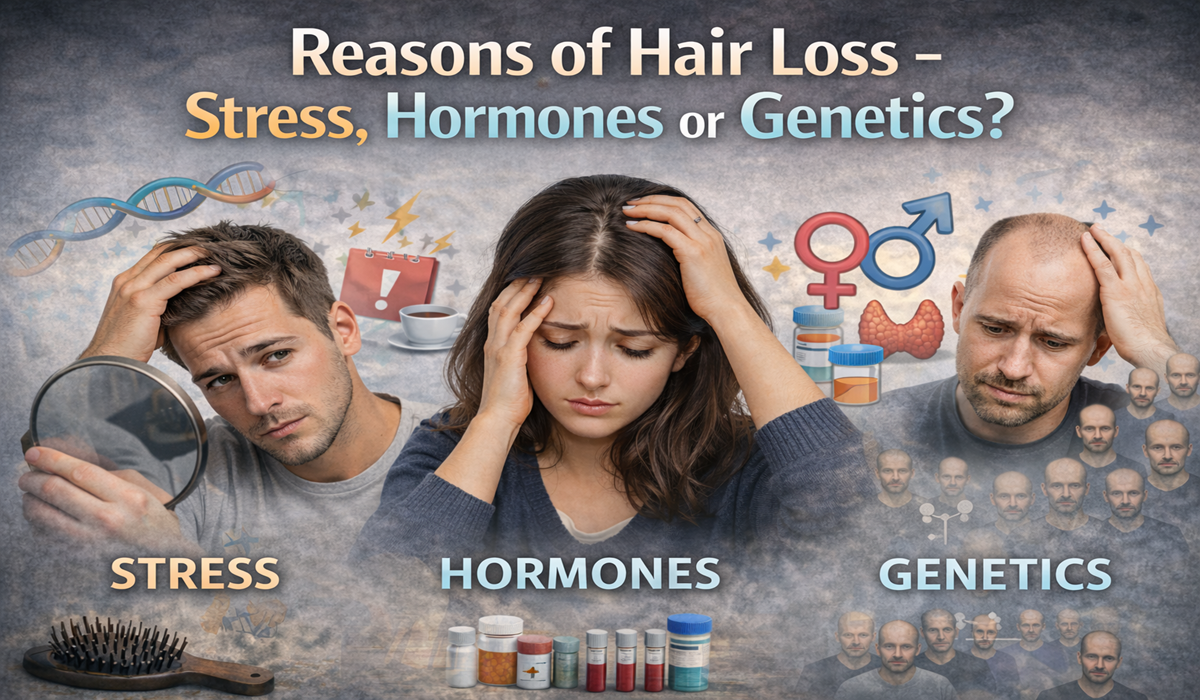
In reality, hair loss rarely has a single cause. In most cases, it is influenced by stress, hormonal imbalance, genetics, or a combination of all three. Understanding the root cause is essential, because hair loss treatment without proper diagnosis often leads to frustration and poor results.
This article explains how stress, hormones, and genetics affect hair health, how to recognise the dominant cause, and how dermatologist-led care makes a real difference.
Understanding the Hair Growth Cycle
Each hair strand goes through a natural cycle of growth, rest, and shedding. Normally, a small amount of daily hair fall is expected. Problems begin when more hair enters the shedding phase together or when new hair growth becomes weaker and slower.
Triggers like emotional stress, hormonal changes, nutritional deficiencies, or genetic sensitivity disturb this cycle, leading to visible thinning over time.
Stress-Related Hair Loss: A Common but Reversible Cause
Stress is one of the most underestimated causes of hair fall. Both physical stress, such as illness, surgery, sudden weight loss, or infections, and emotional stress, such as anxiety, lack of sleep, or work pressure, can disrupt the hair cycle.
The most common stress-related condition is Telogen Effluvium, where a large number of hair follicles shift into the resting phase together. Hair fall usually begins two to three months after the triggering event, which is why many people fail to link stress with hair loss.
Stress-related hair loss often presents as sudden excessive shedding, hair coming out in handfuls, and overall thinning rather than patchy baldness. With proper care, stress-related hair loss is usually reversible.
Hormonal Hair Loss: Often Overlooked, Especially in Women
Hormones play a crucial role in hair growth. Even mild hormonal imbalance can weaken hair follicles.
In women, common hormonal causes include thyroid disorders, PCOS, post-pregnancy changes, irregular menstrual cycles, and sudden hormonal fluctuations. Hair thinning in such cases is usually diffuse and concentrated around the crown or part line.
In men, hormonal hair loss is mainly driven by sensitivity to DHT, which gradually shrinks hair follicles and shortens the growth phase. Over time, hair becomes finer and density reduces.
Hormonal hair loss does not respond well to home remedies alone. Identifying and correcting the imbalance is key.
Genetic Hair Loss: Progressive but Manageable
Genetic hair loss, medically called androgenetic alopecia, is the most common cause of long-term hair thinning. It runs in families and develops gradually.
Men may notice a receding hairline or thinning at the crown, while women usually experience reduced density on the top of the scalp without complete baldness.
Genetic hair loss cannot be cured, but it can be slowed down and controlled effectively if addressed early. Delaying treatment often leads to permanent follicle damage.
When Multiple Causes Overlap
In real-life clinical practice, hair loss is rarely caused by a single factor. A person with genetic hair loss may experience sudden shedding due to stress. A woman with PCOS may also have a genetic tendency toward thinning hair. Stress itself can worsen hormonal imbalance.
This overlap is the reason why copying someone else’s hair routine or treatment rarely works.
Why Self-Diagnosis Often Delays Results
Many people assume their hair loss is “normal” or try to treat it with oils, supplements, or internet advice. This often delays proper care and allows hair thinning to progress.
Hair loss requires medical evaluation, not guesswork. Early diagnosis helps preserve existing hair and prevents unnecessary damage.
How Atomic Clinic Helps Identify and Treat Hair Loss Correctly
At Atomic Clinic, Varanasi, hair loss treatment starts with identifying the cause, not just addressing hair fall symptoms. Since stress, hormones, and genetics frequently overlap, a personalised approach is essential.
Each patient undergoes a detailed consultation that includes lifestyle assessment, stress evaluation, family history, and scalp examination. Hair density, scalp health, and follicle condition are carefully analysed. When required, blood tests are advised to rule out hormonal or nutritional deficiencies instead of starting blind treatments.
Based on the diagnosis, a customised treatment plan is created. This may include medical therapy to control hair fall, advanced procedures like PRP or GFC when suitable, scalp health treatments, lifestyle guidance, and long-term maintenance strategies for genetic hair loss.
What distinguishes Atomic Clinic is its ethical, dermatologist-led approach. Patients are clearly informed about realistic outcomes, timelines, and the need for consistency. Treatments are designed for long-term hair health rather than short-term cosmetic improvement.
When Should You Consult a Dermatologist?
You should seek professional evaluation if hair fall lasts more than six to eight weeks, visible thinning is increasing, or hair volume continues to reduce despite care. Early consultation leads to better control and improved outcomes.
Atomic Clinic–Specific FAQs
Is hair loss treatment personalised at Atomic Clinic?
Yes. Treatment plans are customised after detailed scalp evaluation and diagnosis.
Can stress-related hair loss be reversed?
In many cases, yes. When the trigger is controlled and proper medical support is given, regrowth is possible.
Does Atomic Clinic treat female hair loss?
Yes. Female hair loss related to hormones, stress, or genetics is commonly treated with personalised protocols.
Are PRP or advanced treatments necessary for everyone?
No. Such treatments are advised only when medically suitable.
How soon can results be expected?
Hair improvement is gradual. Most patients notice reduced hair fall first, followed by better hair quality over time.
Final Conclusion: What You Should Remember
Hair loss is not just a cosmetic issue; it is often a sign that something internal needs attention. Whether the cause is stress, hormonal imbalance, genetics, or a combination, the solution begins with accurate diagnosis.
At Atomic Clinic, hair loss is treated with medical insight, honesty, and long-term planning. Instead of temporary fixes or unrealistic promises, the focus remains on protecting existing hair, improving scalp health, and guiding patients toward sustainable results.
If your hair fall feels persistent or worrying, seeking expert evaluation early can make a meaningful difference. Healthy hair begins with understanding the cause, not guessing the cure.