
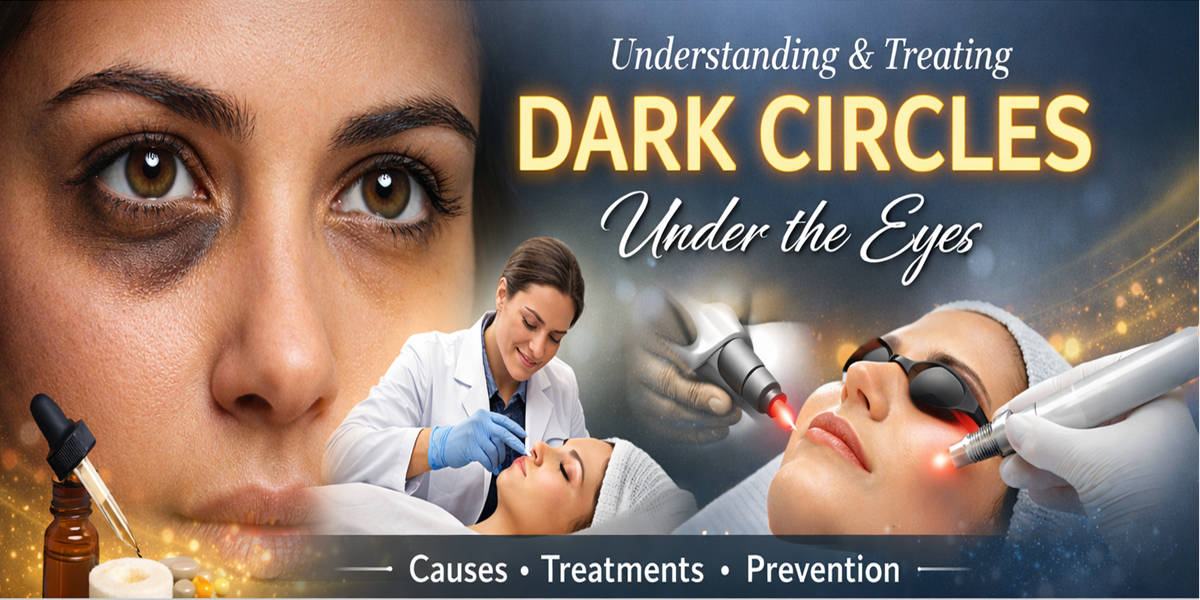
Dark Circles under Eyes: Medical Reasons and Treatment Options

Getting a good night’s sleep does not always make dark circles disappear. You may wake up feeling well-rested, yet the area beneath your eyes still looks dark and tired. Concealers provide temporary coverage, and eye creams may offer some improvement, but the darkness often remains.
If you have been wondering how to reduce dark circles under eyes without constantly buying new skincare products, it helps to understand what is causing them in the first place.
Dark circles can develop due to hereditary factors, excess pigmentation, allergies, thinning skin or changes in facial structure. In many cases, more than one factor is involved.
At Atomic Clinic, Varanasi, the approach to treating dark circles begins with identifying the underlying cause rather than recommending the same treatment to everyone.
What Causes Dark Circles Under Eyes?
The skin surrounding the eyes is naturally thinner and more delicate than the skin on many other parts of the face. This makes underlying blood vessels, pigmentation and changes in facial volume more noticeable.
Some people develop brown patches beneath their eyes, while others notice a bluish or purple colour. In certain cases, the darkness is actually a shadow created by hollowness beneath the lower eyelid.
Understanding these differences is important because a treatment that works for pigmentation may do very little for under-eye hollows.
Genetic Factors
If your parents or other close family members have dark circles, you may develop them at a relatively young age.
Inherited characteristics such as naturally thin skin, increased pigmentation and the shape of the under-eye area can contribute to their appearance.
Genetic dark circles may remain visible even when you sleep well, drink enough water and follow a suitable skincare routine.
Although inherited dark circles can be difficult to eliminate completely, appropriate treatment may help reduce their appearance.
Excess Pigmentation Around the Eyes
Under-eye hyperpigmentation occurs when excess melanin accumulates in the skin surrounding the eyes. It commonly appears as brown or greyish discolouration and can be particularly noticeable in Indian skin tones.
Frequent eye rubbing, sun exposure, eczema and inflammation caused by allergies may contribute to increased pigmentation.
People who spend considerable time outdoors in Varanasi without adequate sun protection may notice their existing pigmentation becoming more prominent.
Under-Eye Hollows and Tear Troughs
Have you noticed that your dark circles look worse under overhead lighting but appear less noticeable in photographs taken from certain angles?
The darkness may be caused partly by shadows rather than pigmentation.
The tear trough is the natural groove that extends from the inner corner of the eye towards the cheek. As facial volume changes with age, this area can become more prominent.
Some younger individuals also have naturally deep tear troughs due to their facial anatomy.
Eye creams cannot restore lost facial volume, which explains why topical products often provide limited improvement for this type of dark circle.
Thin Skin and Visible Blood Vessels
When the skin beneath the eyes is particularly thin, underlying blood vessels may become more visible. This can give the area a blue, purple or reddish appearance.
Age-related changes in collagen and skin thickness may make vascular dark circles more noticeable over time.
Treatment for this type of discolouration differs from treatment for excess melanin.
Allergies and Frequent Eye Rubbing
People with allergic rhinitis, hay fever, eczema or sensitive eyes often experience itching around the eyes.
Repeated rubbing can irritate the delicate skin and eventually contribute to post-inflammatory pigmentation. Nasal allergies may also make the under-eye area appear darker or swollen.
If you frequently experience watery eyes, sneezing, nasal congestion or itching alongside dark circles, managing the underlying allergy may be an important part of treatment.
Poor Sleep and Lifestyle Habits
Lack of sleep can make existing dark circles more noticeable. Irregular sleep patterns, smoking and dehydration may also affect how rested the face appears.
Long hours spent using computers and mobile phones can contribute to eye strain and tired-looking eyes, although screen exposure itself is not an established direct cause of under-eye pigmentation.
Improving your daily habits may help reduce temporary darkness and puffiness, but it may not correct inherited or structural dark circles.
Nutritional Deficiencies and Anaemia
People often ask which vitamin deficiency causes dark circles under the eyes.
Iron deficiency anaemia and deficiencies involving vitamin B12 or folate can contribute to fatigue and pallor, potentially making existing under-eye darkness more noticeable.
However, dark circles alone cannot confirm a nutritional deficiency.
If you also experience persistent tiredness, dizziness, breathlessness or unusual weakness, a doctor may recommend blood tests to investigate the cause.
Avoid taking iron or vitamin supplements simply because you have dark circles without first establishing whether you need them.
What Are the Different Types of Dark Circles?
Dark circles are generally classified according to the factors responsible for their appearance.
| Type of dark circles | Common characteristics |
|---|---|
| Pigmented dark circles | Brown or greyish discolouration caused by melanin |
| Vascular dark circles | Blue, purple or reddish appearance associated with visible blood vessels |
| Structural dark circles | Shadows caused by tear troughs, hollowing or facial anatomy |
| Mixed dark circles | A combination of pigmentation, visible vessels and structural changes |
These categories can overlap, making self-diagnosis difficult. A dermatologist can examine the under-eye area and determine which factors are contributing to the darkness.
How to Reduce Dark Circles Under Eyes Naturally
Not every person with dark circles needs a cosmetic procedure. If the darkness is related to poor sleep, temporary puffiness, irritation or lifestyle habits, simple changes may provide some improvement.
Maintain a Consistent Sleep Schedule
Rather than trying to compensate for several nights of poor sleep by sleeping longer at weekends, aim for a regular sleep schedule.
Most adults need approximately seven to nine hours of sleep each night.
Adequate sleep may improve the appearance of tired eyes, although it will not necessarily remove genetic pigmentation or under-eye hollows.
Use a Cold Compress
A clean, cool compress applied gently over closed eyes for a few minutes may help reduce temporary puffiness.
This can be particularly useful in the morning when the under-eye area appears swollen.
Avoid applying ice directly to the delicate skin around your eyes.
Wear Sunscreen and Sunglasses
Sun exposure can aggravate existing pigmentation. Regular use of broad-spectrum sunscreen with SPF 30 or higher can help protect the skin around your eyes.
Choose a sunscreen that is suitable for the delicate eye area and avoid getting it into your eyes. Sunglasses with UV protection provide additional protection, particularly when spending long hours outdoors.
Avoid Rubbing Your Eyes
Frequent eye rubbing is an overlooked reason why under-eye pigmentation can gradually become worse.
If you regularly experience itchy eyes, identifying and treating the cause of the itching is more useful than repeatedly applying brightening creams.
Stay Hydrated and Eat a Balanced Diet
Drinking adequate water and eating a varied diet support general skin health.
Include foods containing protein, iron, vitamins and other essential nutrients according to your dietary requirements.
Good nutrition may help if poor dietary intake is contributing to a tired appearance, but no particular food can guarantee the removal of dark circles.
Avoid Harsh Home Remedies
Lemon juice, baking soda, toothpaste and strong homemade exfoliating mixtures are sometimes promoted as quick remedies for dark circles.
The skin around your eyes is particularly sensitive. Applying irritating substances can cause inflammation, allergic reactions and worsening pigmentation.
Gentle skincare is generally a better choice than experimenting with aggressive home remedies.
Why Do I Have Dark Circles Even When I Sleep Enough?
This is a common question among people who maintain a healthy lifestyle but continue to notice darkness beneath their eyes.
Sleep deprivation is only one possible contributing factor. Genetic pigmentation, naturally thin skin, allergies, tear troughs and age-related changes can all cause dark circles regardless of how much sleep you get.
For example, someone with naturally deep under-eye hollows may look tired even after eight hours of uninterrupted sleep. Similarly, inherited pigmentation may remain visible despite regular hydration and a balanced diet.
If your dark circles have been present for several years and do not change much with improvements in sleep, a dermatology consultation may help identify the reason.
Why Are My Dark Circles Not Improving With Eye Creams?
Eye creams can be useful when they contain appropriate ingredients and address the correct concern.
A hydrating eye cream may improve dryness and make fine lines less noticeable. Certain brightening ingredients may gradually improve superficial pigmentation.
However, an eye cream cannot fill a deep tear trough or substantially change the natural structure of your face.
The same limitation applies to many home remedies. Cucumber slices and cold tea bags may temporarily soothe the area or reduce puffiness, but they cannot reliably correct every type of dark circle.
Before buying another expensive eye cream, it may be worth finding out whether your under-eye darkness is caused by pigmentation, visible blood vessels or structural shadowing.
What Is the Best Treatment for Dark Circles Under Eyes?
The best treatment depends on what is causing the darkness.
Someone with brown pigmentation around the eyes may benefit from a completely different treatment than someone with pronounced tear troughs.
At Atomic Clinic, Varanasi, treatment options can be considered following an assessment of the under-eye area, skin type, medical history and previous skincare treatments.
1. Dermatologist-Prescribed Under-Eye Creams
Depending on the type of pigmentation, a dermatologist may recommend topical products containing ingredients such as vitamin C, niacinamide, peptides or selected retinoids.
Some prescription depigmenting ingredients may also be appropriate for certain patients.
These products generally require consistent use over several weeks or months before their effects can be assessed.
Because the eyelid area is particularly delicate, strong retinoids and pigmentation treatments should not be applied close to the eyes without medical guidance.
2. Chemical Peel for Dark Circles
Superficial chemical peels may be considered for selected patients with pigmented dark circles.
The treatment uses carefully chosen exfoliating solutions to improve superficial pigmentation and uneven skin tone.
The strength and formulation of the peel matter, especially for Indian skin tones, which may be susceptible to post-inflammatory hyperpigmentation.
Chemical peels around the eyes should only be performed by suitably qualified medical professionals. Improper application can cause burns, irritation and eye injuries.
3. PRP Treatment for Dark Circles
Platelet-rich plasma, commonly known as PRP, is prepared from a small sample of the patient’s own blood.
The treatment has been studied for its potential to improve skin quality, texture and certain types of under-eye pigmentation.
PRP treatment for dark circles may be considered when thinning skin and changes in skin quality are contributing factors. However, the degree of improvement varies, and research has not established a single treatment protocol that works for everyone.
Patients may require multiple sessions depending on the treatment plan and their response.
4. Under-Eye Fillers for Dark Circles
When the darkness is caused mainly by hollowness and shadowing, a dermatologist may consider hyaluronic acid fillers for carefully selected patients.
Under-eye fillers are intended to restore volume and soften the transition between the lower eyelid and cheek.
They do not directly remove melanin, which means they may offer limited improvement when pigmentation is the primary concern.
The under-eye region is a technically sensitive area for injectable treatments. Possible complications include swelling, bruising, lumps and, in rare cases, serious blood vessel complications that can cause tissue damage or vision loss.
A qualified, experienced medical practitioner should assess suitability and explain these risks before treatment.
5. Laser Treatment for Dark Circles
Laser treatment may help improve certain types of under-eye pigmentation or vascular discolouration.
Different laser technologies target different components of the skin. The choice of device and treatment settings depends on the patient’s skin tone, the underlying cause and the condition of the surrounding tissue.
Laser treatment for dark circles may require multiple sessions. Results can vary, and improper treatment can worsen pigmentation.
Appropriate eye protection is essential during laser procedures performed near the eyes.
6. Treating Underlying Medical Conditions
When allergies, eczema, anaemia or another medical condition is contributing to dark circles, addressing that condition may be more important than undergoing a cosmetic procedure.
A dermatologist may recommend treatment for skin inflammation or suggest further medical evaluation where necessary.
A combination of medical care and suitable cosmetic treatment may be appropriate for patients with several contributing factors.
How to Remove Dark Circles Permanently: Is It Possible?
Many people search for how to remove dark circles permanently because they are tired of relying on concealers, eye creams and repeated home remedies.
However, permanent removal is not always possible.
Inherited skin characteristics, natural facial anatomy and age-related changes cannot necessarily be eliminated completely. Even after successful treatment, pigmentation may return with continued sun exposure, inflammation or other contributing factors.
Medical treatment can help reduce the appearance of dark circles, sometimes substantially, but the extent and duration of improvement vary from person to person.
A realistic treatment goal is to achieve a noticeable improvement that can be maintained with appropriate skincare and follow-up care.
Be cautious of products or clinics promising guaranteed permanent removal of dark circles in a single session.
How to Treat Genetic Dark Circles
Genetic dark circles are often present from childhood or early adulthood. You may notice similar under-eye darkness in other members of your family.
Treatment depends on whether the inherited characteristic involves excess pigmentation, thin skin or prominent tear troughs.
For pigmentation-related concerns, topical treatments and selected dermatological procedures may offer improvement. For structural shadowing, other approaches may be more appropriate.
Some people have a combination of both, which may require more than one treatment method.
Although genetic dark circles can be persistent, their appearance may still improve with a carefully selected treatment plan.
How Long Does Dark Circle Treatment Take to Show Results?
There is no fixed timeline because different treatments work in different ways.
Topical pigmentation treatments generally require regular use over several weeks or months. Chemical peels, PRP and laser procedures may involve multiple sessions, with improvement developing gradually.
Fillers may produce an earlier visible change in hollowness, although swelling can temporarily affect the appearance of the treated area.
Your dermatologist can explain the expected timeline after examining your skin and recommending an appropriate treatment.
Progress photographs taken under similar lighting conditions may help assess improvement more accurately than looking in the mirror several times a day.
What Is the Cost of Dark Circle Treatment in Varanasi?
The cost of dark circle treatment in Varanasi varies depending on the cause of the darkness and the treatment recommended.
Someone who requires prescription skincare may have a different treatment expense from someone considering PRP, laser treatment or under-eye fillers.
Other factors include the number of sessions required, the type of product or equipment used and whether a combination of treatments is recommended.
At Atomic Clinic, a consultation can help establish the most appropriate treatment approach and its associated cost.
Choosing a procedure based solely on its price may lead to unnecessary spending if it does not address the actual cause of your dark circles.
When Should You Consult a Dermatologist for Dark Circles?
Long-standing dark circles are usually a cosmetic concern, but professional assessment can be helpful if they persist despite adequate sleep and appropriate skincare.
Consider consulting a dermatologist if:
Your dark circles are becoming progressively darker.
Under-eye creams have not helped despite consistent use.
You frequently experience itching or irritation around the eyes.
You have noticeable under-eye hollows or persistent puffiness.
Dark circles are accompanied by other skin concerns, such as eczema or pigmentation.
You are considering chemical peels, PRP, fillers or laser treatment.
If darkening or swelling develops suddenly, particularly under only one eye, seek medical assessment. Eye pain, sudden vision changes or severe swelling require urgent medical attention.
Dark Circle Treatment at Atomic Clinic, Varanasi
Dark circles can look similar from a distance, but the reasons behind them often differ considerably.
At Atomic Clinic, the approach to under-eye treatment involves examining the pigmentation, skin texture, facial structure and other possible contributing factors before recommending a procedure.
Patients who have already tried several creams and cosmetic treatments can discuss their previous experiences during the consultation.
Depending on the assessment, suitable options may include dermatologist-prescribed skincare, chemical peels, PRP therapy, fillers or laser-based procedures.
If you are looking for professional skin rejuvenation and dark circle treatment in Varanasi, a consultation can help determine which treatment is appropriate for your individual concern.
Frequently Asked Questions About Dark Circles
How to get rid of dark circles under eyes?
Start by identifying the cause. Improving sleep, avoiding eye rubbing, using sunscreen and managing allergies may help some people. Persistent pigmentation, visible blood vessels or structural hollowness may require dermatologist-guided treatment.
How to remove dark circles under eyes fast?
A cold compress, adequate rest and suitable moisturiser may temporarily improve tired-looking eyes and puffiness. Long-standing pigmentation and under-eye hollows generally require more time and targeted treatment.
Can dark circles be removed naturally?
Dark circles associated with temporary fatigue, dehydration or irritation may improve with lifestyle changes. Genetic pigmentation and structural dark circles are less likely to disappear through natural remedies alone.
Can vitamin C remove dark circles?
Vitamin C may help improve certain types of superficial pigmentation when used in an appropriate formulation. It cannot correct under-eye hollowness or every type of dark circle.
Does drinking more water reduce dark circles?
Adequate hydration may help improve the appearance of dehydrated skin. However, drinking additional water will not necessarily remove dark circles caused by genetics, pigmentation or facial structure.
Can mobile phones cause dark circles?
Prolonged mobile phone use may contribute to eye strain and disrupt sleep, which can make the eyes appear tired. There is insufficient evidence that ordinary mobile screen exposure directly causes under-eye pigmentation.
Which vitamin deficiency causes dark circles?
Iron deficiency anaemia and deficiencies involving vitamin B12 or folate may contribute to fatigue and pallor, making under-eye darkness more noticeable. Blood tests may be needed to establish whether a deficiency is present.
Is laser treatment safe for dark circles?
Laser treatment may be appropriate for selected patients when performed by an experienced medical professional using suitable equipment, treatment settings and eye protection. Potential risks include irritation, burns and changes in pigmentation.
Is PRP better than fillers for dark circles?
Neither treatment is universally better. PRP may be considered for certain skin-quality concerns, whereas fillers are intended primarily to correct volume loss and hollowing. The appropriate choice depends on the underlying cause.
Can a dermatologist remove dark circles permanently?
A dermatologist can recommend treatments that may significantly reduce their appearance. Permanent removal cannot be guaranteed because genetic factors, ageing and environmental influences may continue to affect the under-eye area.
Can men undergo dark circle treatment?
Yes. Dark circles affect both men and women. Treatment selection depends on the cause, skin condition and facial anatomy rather than gender.
How many sessions are required for dark circle treatment?
The number of sessions varies depending on the procedure, severity of the concern and individual response. A dermatologist can provide an estimated treatment schedule after assessing the under-eye area.
Reducing Dark Circles Starts With Understanding the Cause
If your dark circles have remained unchanged despite months of eye creams, home remedies and better sleep, repeating the same approach may not produce a different result.
Sometimes, a relatively simple change in skincare or allergy management is enough to improve the area. In other cases, the darkness comes from inherited pigmentation, thinning skin or natural facial anatomy that requires a different approach.
Knowing which type of dark circles you have can save you considerable time and unnecessary expenditure.
At Atomic Clinic in Varanasi, you can seek professional guidance regarding persistent under-eye pigmentation, hollowing and other concerns before deciding on a treatment.
Medical disclaimer: This article is intended for educational purposes and does not replace an individual medical consultation. Treatment suitability, results, recovery time and possible side effects vary depending on individual skin conditions and medical history.