
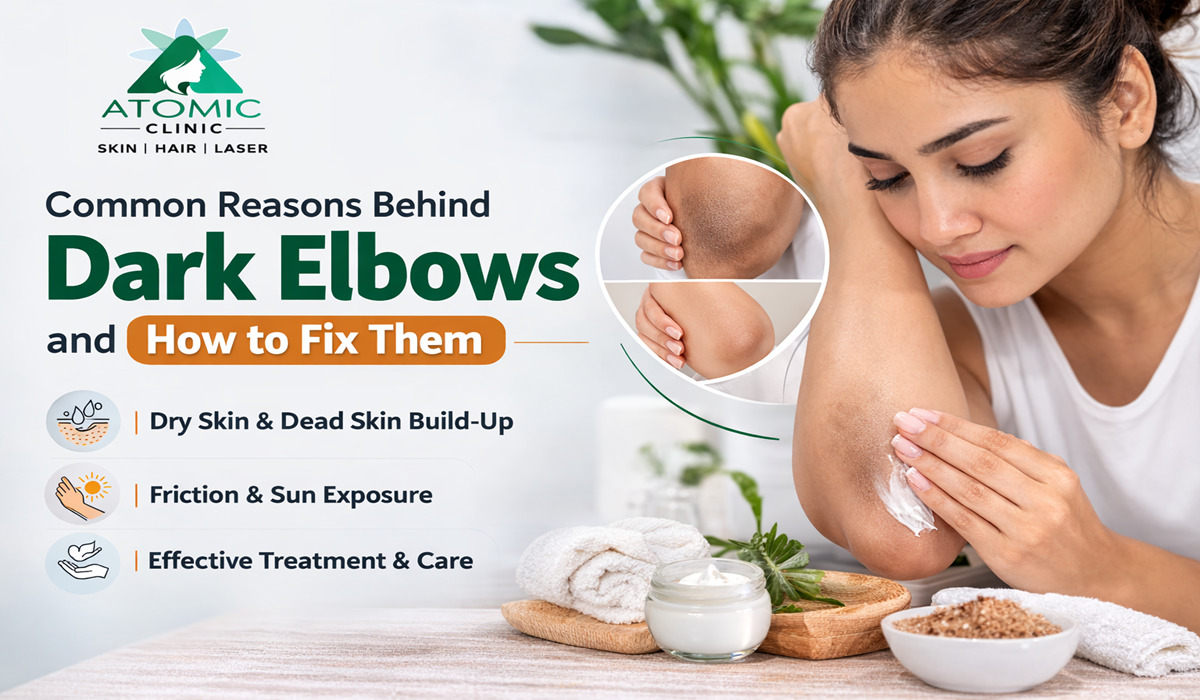
Common Reasons Behind Dark Elbows and How to Fix Them

Dark elbows are a very common concern that many people notice over time. While most individuals focus on facial skincare, areas like elbows and knees often receive little attention. As a result, these areas can gradually become darker, rougher, and more noticeable compared to the rest of the skin.
For some people, dark elbows may simply be a cosmetic issue, but for others it can affect confidence, especially when wearing short sleeves or sleeveless clothing. The good thing is that this condition is usually manageable once you understand the causes behind it and take the right steps to care for your skin.
In this article, we will look at the common reasons why elbows become dark and what can be done to improve their appearance, including how professional guidance from Atomic Clinic can help when home care is not enough.
Why Elbows Are More Prone to Darkening
The skin on the elbows is naturally thicker than most other parts of the body. It also bends frequently throughout the day, which leads to constant stretching and friction. Because of this, the elbow area tends to become dry more easily.
When skin remains dry for a long time or experiences repeated friction, the outer layer may thicken and accumulate dead skin cells. This buildup often makes the area look darker and rougher than the surrounding skin.
Understanding what contributes to this change can make it easier to manage and prevent the problem.
1. Buildup of Dead Skin Cells
One of the most common reasons for dark elbows is the accumulation of dead skin cells. Since people rarely exfoliate their elbows regularly, the dead skin layer gradually thickens. This can create a dull, uneven tone that looks darker over time.
What You Can Do
Gentle exfoliation can help remove the outer layer of dead skin and improve the texture of the area. Body scrubs or exfoliating products that contain ingredients such as lactic acid or glycolic acid can support gradual skin renewal.
However, exfoliation should always be done carefully. Scrubbing too aggressively can irritate the skin and make pigmentation worse instead of better.
2. Dry Skin and Lack of Moisturisation
Another major reason for dark elbows is dryness. The elbow region contains fewer oil glands compared to other areas of the body, which means it can lose moisture quickly.
When skin becomes dry, it may appear rough and slightly thickened. Over time, this dryness can make the pigmentation more noticeable.
What You Can Do
Applying a nourishing moisturiser daily can make a big difference. Look for products that contain hydrating and skin-softening ingredients such as:
- Urea
- Shea butter
- Ceramides
- Lactic acid
These ingredients help soften thick skin and support better skin texture when used consistently.
3. Constant Friction
Many daily habits contribute to friction on the elbows. For example, resting your elbows on a desk while working or studying may seem harmless, but repeated pressure on the same area can cause the skin to thicken and darken over time.
This is particularly common among students, office workers, and people who spend long hours at a desk.
What You Can Do
Reducing friction can help prevent further darkening. Try to avoid resting your elbows on hard surfaces for long periods. Using a soft cushion or arm support while working may also help minimise pressure on the area.
Keeping the skin well moisturised also reduces dryness caused by friction.
4. Sun Exposure
Although elbows are not always directly exposed to sunlight, they can still develop pigmentation due to UV exposure, especially when wearing short sleeves.
Sunlight stimulates the production of melanin in the skin. Over time, this can contribute to uneven skin tone and darker patches.
What You Can Do
Applying sunscreen on exposed areas of the body can help protect the skin from further pigmentation. This simple step is often overlooked when it comes to body care but plays an important role in maintaining an even skin tone.
5. Hormonal Factors or Underlying Conditions
In some cases, dark elbows may be linked to hormonal changes or certain medical conditions that affect skin pigmentation. One example is acanthosis nigricans, a condition where the skin becomes darker and thicker in certain areas like the neck, underarms, and elbows.
This condition may sometimes be associated with metabolic or hormonal factors. If the darkening appears suddenly, spreads quickly, or is accompanied by thickened skin, it is advisable to seek professional medical advice.
When Home Remedies Are Not Enough
While regular exfoliation and moisturising can help in many cases, some people may not see significant improvement with home care alone. This can happen when pigmentation is deeper or when the skin has become significantly thickened.
At this stage, consulting a dermatologist can be helpful. A professional evaluation allows the underlying cause to be identified and treated appropriately.
How Atomic Clinic Helps in Treating Dark Elbows
For individuals who are concerned about persistent elbow pigmentation, professional skin care can provide more targeted solutions. Atomic Clinic, known for its dermatology-focused approach to skin health, offers personalised treatment plans based on the patient’s skin type and condition.
At the clinic, the first step usually involves a proper skin assessment. Dark elbows can develop for different reasons, and identifying the exact cause is important before starting any treatment.
Based on the evaluation, dermatologists at Atomic Clinic may recommend treatments that help improve skin texture and reduce pigmentation. These may include medical-grade exfoliation procedures, specialised skincare treatments, or dermatologist-recommended topical products designed to support skin renewal.
Unlike random home remedies, these treatments are performed under professional supervision, which ensures that the skin is treated safely and effectively.
Another important aspect of treatment at Atomic Clinic is patient education. Patients are guided on how to care for their skin properly at home, including suitable moisturisers, exfoliation routines, and sun protection. This helps maintain the results of treatment and prevents the pigmentation from returning.
Because every person’s skin responds differently, the clinic focuses on customised care rather than one-size-fits-all solutions.
Building a Simple Routine for Elbow Care
Maintaining healthy elbows does not require a complicated routine. A few consistent habits can help keep the skin smooth and even-toned.
A basic routine may include:
- Cleansing the area during daily bathing
- Gentle exfoliation once or twice a week
- Applying a moisturiser regularly
- Protecting exposed skin with sunscreen
- Avoiding prolonged pressure on the elbows
Over time, these small steps can improve the appearance of the skin and prevent further darkening.
Final Thoughts
Dark elbows are a common skin concern and are often the result of everyday factors such as dryness, friction, and dead skin buildup. While home care can improve mild cases, some people may benefit from professional guidance when pigmentation becomes persistent.
Understanding the cause of the problem is the first step toward treating it effectively. With consistent skincare and the right approach, the skin on the elbows can gradually become smoother and more even in tone.
For individuals seeking professional support, Atomic Clinic provides dermatology-based treatments and personalised skincare advice, helping patients address concerns like elbow pigmentation in a safe and medically guided way.