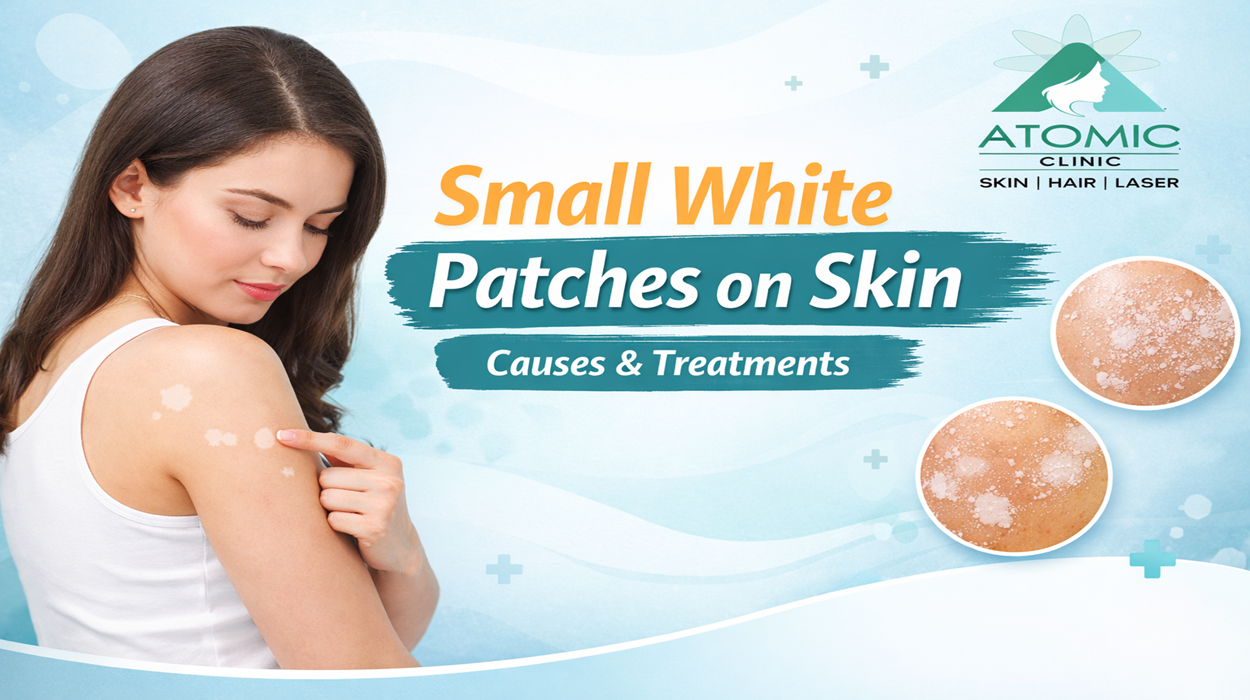
Small White Patches on Skin: Causes, Treatment & When to Worry

It usually starts with something small.
You’re getting ready in the morning, glance in the mirror, and suddenly notice a faint white spot on your face, arms, or neck. At first, it doesn’t seem like a big deal. But over time, you start noticing more of them—or that the spot isn’t going away.
That’s when the concern kicks in.
Many people visit us at the clinic with the same worry: “Why am I getting these small white patches on skin?” The confusion is understandable because not all white patches mean the same thing. Some are harmless and temporary, while others may need proper medical attention.
Let’s break this down in a simple and practical way so you know exactly what you’re dealing with.
What Are Small White Patches on Skin?
Small white patches on skin are areas where the skin loses its normal color (pigment). This happens when melanin—the pigment responsible for your skin tone—is reduced or absent in certain spots.
These patches can vary in:
- Size (tiny dots to larger patches)
- Shape (round, irregular, or spread-out)
- Location (face, arms, back, neck, legs)
- Texture (smooth, dry, or slightly scaly)
The important thing to understand is that these patches are not a condition themselves—they are a symptom of an underlying cause.
Common Causes of Small White Patches on Skin
Not all white patches are serious, but identifying the cause is key to treating them properly.
1. Fungal Infection (Tinea Versicolor)
One of the most common causes we see, especially in Indian weather conditions.
- Appears as light or white patches, often on the chest, back, or arms
- May have mild itching
- Skin may look slightly dry or flaky
This condition is caused by yeast overgrowth on the skin and is usually manageable with proper treatment.
2. Vitiligo
This is a more well-known condition but often misunderstood.
- Patches are clearly defined and milky white
- Can appear anywhere, including face and hands
- Usually spreads gradually
Vitiligo happens when pigment-producing cells stop functioning. It is not contagious, but it does require proper medical evaluation.
3. Post-Sun Damage (Idiopathic Guttate Hypomelanosis)
Common in people with frequent sun exposure.
- Small white dots, usually on arms and legs
- More common after age 30
- No itching or discomfort
These are generally harmless but can increase over time if skin is not protected.
4. Dry Skin (Pityriasis Alba)
Very common in children and young adults.
- Light patches, often on cheeks
- Slight dryness or roughness
- More visible after sun exposure
This condition is mild and usually improves with proper moisturization.
5. Nutritional Deficiencies
In some cases, deficiencies in vitamins like B12, calcium, or zinc can contribute to skin discoloration.
- Patches may not be very defined
- Often accompanied by other signs like fatigue or hair fall
How to Tell If It’s Serious or Not
This is where most people get confused.
Here are some simple ways to understand whether your small white patches on skin need attention:
Likely Harmless If:
- Patches are small and not increasing
- No itching or irritation
- Slight dryness is present
- Appears after sun exposure
Needs Medical Attention If:
- Patches are spreading
- Borders are sharply defined
- Color is completely white (not just lighter)
- Appearing on face or sensitive areas
- No improvement with basic care
When in doubt, it’s always better to get it checked rather than guessing.
When Should You Consult a Skin Specialist?
You should not ignore small white patches on skin if:
- They are increasing in number
- They persist for weeks without improvement
- You’re unsure about the cause
- Home remedies are not helping
- There is a family history of skin conditions
Early diagnosis can prevent unnecessary stress and help start the right treatment on time.
Treatment Options for Small White Patches on Skin
Treatment depends entirely on the cause. There is no one-size-fits-all solution.
1. Topical Treatments
- Anti-fungal creams (for fungal infections)
- Mild steroid creams (in certain conditions)
- Moisturizers (for dry skin-related patches)
2. Clinical Treatments
At a professional clinic, treatment may include:
- Medicated therapies
- Light-based treatments (for specific conditions like vitiligo)
- Chemical-based procedures (only when suitable)
3. Lifestyle Corrections
Sometimes, simple changes make a big difference:
- Regular sunscreen use
- Balanced diet
- Proper hydration
- Avoiding harsh skincare products
Do’s and Don’ts for Managing White Patches
Do’s:
- Keep your skin moisturized
- Use sunscreen daily
- Maintain hygiene (especially in humid weather)
- Eat a balanced diet
- Get a proper diagnosis
Don’ts:
- Don’t self-diagnose using the internet
- Don’t apply random creams without advice
- Don’t ignore spreading patches
- Don’t expect overnight results
- Don’t rely only on home remedies
Common Myths vs Facts (Very Important)
Myth: White patches are always vitiligo
Fact: Many conditions can cause white patches—most are not vitiligo
Myth: It spreads by touch
Fact: Most white patch conditions are not contagious
Myth: Home remedies can cure everything
Fact: Some conditions require medical treatment
Myth: It’s just a cosmetic issue
Fact: Sometimes it indicates an underlying condition
Common Mistakes People Make
Over the years, we’ve seen patients delay proper treatment because of small but critical mistakes:
- Using steroid creams without prescription
- Ignoring early signs
- Trying multiple products at once
- Stopping treatment too early
- Believing unverified advice
These mistakes often make the condition worse or delay recovery.
Final Thoughts
Seeing small white patches on skin can be worrying, but not every case is serious. The key is understanding what your skin is trying to tell you.
Some patches are temporary and manageable, while others need proper care and guidance. Instead of guessing or trying random solutions, it’s always better to take a clear and informed approach.
Need Expert Advice?
If you’re noticing small white patches on skin and are unsure about the cause, getting a professional opinion can save you time, stress, and unnecessary treatments.
At Atomic Clinic, we focus on understanding your skin condition in detail before recommending any treatment—so you get results that actually make sense for your skin.