
Top Causes of Skin Pigmentation and How Medical Treatments Help

Healthy, even-toned skin is something most people wish for. However, many individuals begin to notice dark patches, uneven skin tone, or stubborn spots appearing on the face over time. This condition, commonly referred to as skin pigmentation, is one of the most frequent concerns seen in dermatology clinics today.
While pigmentation may appear to be only a cosmetic issue, it often reflects deeper changes within the skin. Understanding the cause behind pigmentation is the first step toward choosing the right treatment. At a professional dermatology clinic, patients often learn that what appears to be a simple dark spot can actually have multiple underlying triggers.
This article explains the common causes of pigmentation and how medical treatments can help restore a more even skin tone safely and effectively.
Understanding What Skin Pigmentation Really Is
Pigmentation occurs when the skin produces excess melanin, the natural pigment responsible for the color of our skin, hair, and eyes. Melanin is produced by specialized cells called melanocytes. When these cells become overactive due to internal or external factors, darker patches can appear on the skin.
Pigmentation can develop on different parts of the body, but it most commonly affects areas exposed to sunlight such as the face, forehead, cheeks, upper lip, and neck. In Indian skin types, pigmentation tends to be more noticeable because the skin naturally produces more melanin.
It is important to note that pigmentation is not always the same for everyone. Some people develop small sunspots, while others experience broader patches such as melasma. The treatment approach depends largely on the type and cause of pigmentation.
Sun Exposure: One of the Most Common Triggers
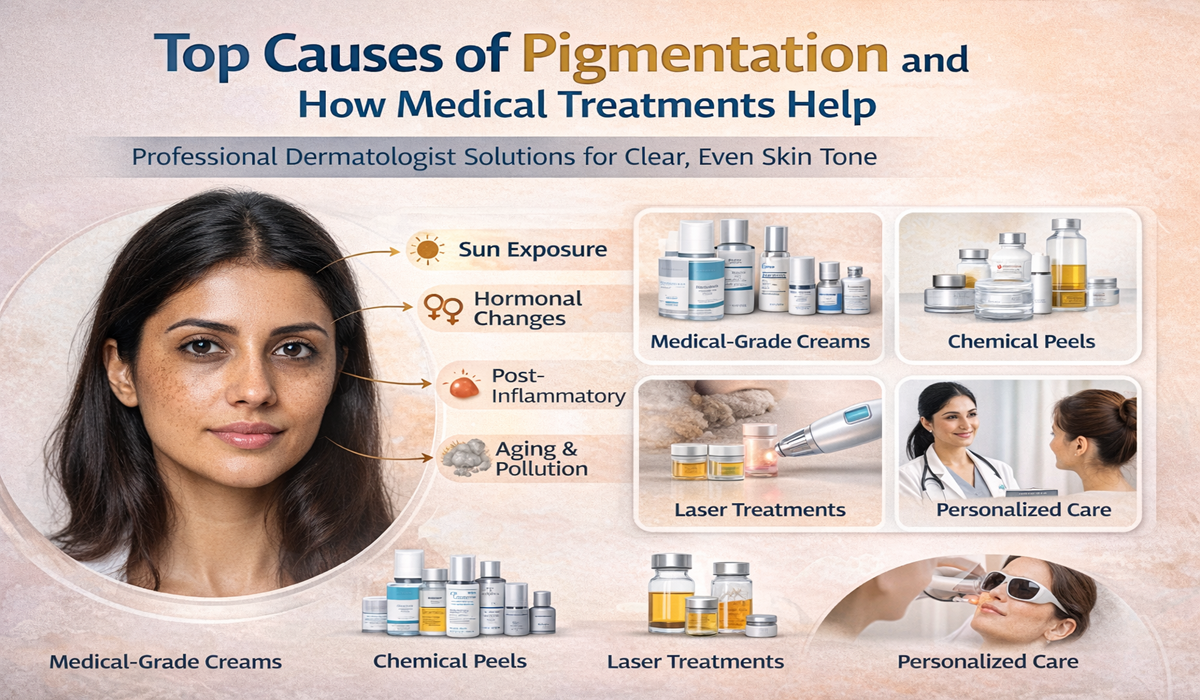
Excessive sun exposure remains one of the leading reasons people develop pigmentation. Ultraviolet (UV) rays stimulate melanin production as the skin tries to protect itself from damage. Over time, this repeated stimulation can lead to dark spots, sunspots, and uneven skin tone.
Many people underestimate the effect of daily sun exposure. Even short periods of exposure without protection can gradually contribute to pigmentation. In cities with strong sunlight, this process tends to accelerate.
Consistent use of sunscreen and protective skincare habits can reduce the risk, but once pigmentation develops, professional treatment may be required to restore balance in the skin.
Hormonal Changes and Melasma
Hormonal fluctuations are another major cause of pigmentation, especially in women. A condition known as melasma often develops due to hormonal changes during pregnancy, use of oral contraceptive pills, or hormonal imbalance.
Melasma typically appears as symmetrical brown patches on the cheeks, forehead, nose, and upper lip. It can sometimes become more prominent with sun exposure or heat.
Unlike simple sunspots, melasma tends to be deeper and more persistent. This is why many over-the-counter creams fail to produce noticeable results. Dermatologist-guided treatments are usually required to manage melasma effectively and safely.
Post-Inflammatory Pigmentation
Another frequent cause of dark marks is post-inflammatory hyperpigmentation, which occurs after the skin experiences irritation or injury. This may happen following acne breakouts, allergic reactions, burns, insect bites, or even aggressive skincare products.
When the skin heals, excess melanin can remain in the affected area, leaving behind dark spots that may last for months if untreated.
People with medium to darker skin tones are particularly prone to this type of pigmentation. Proper acne treatment and gentle skincare play an important role in preventing these marks from forming.
Skin Irritation and Cosmetic Products
Not all pigmentation is caused by internal factors. Sometimes the problem begins with everyday skincare products. Harsh ingredients, excessive exfoliation, and the misuse of active ingredients can disrupt the skin barrier.
When the skin becomes irritated or inflamed, it can trigger increased melanin production as part of the healing response. This often results in uneven pigmentation that may worsen if the skin continues to be exposed to unsuitable products.
This is why dermatologists often advise patients to avoid self-experimenting with multiple skincare products without professional guidance.
Aging and Environmental Factors
As the skin ages, its ability to repair itself gradually slows down. Years of sun exposure, pollution, and environmental stress can lead to the development of age spots and uneven pigmentation.
Pollution particles and oxidative stress can damage skin cells and stimulate melanin production. Combined with natural aging, this can make pigmentation more visible over time.
Preventive skincare and professional dermatology treatments can significantly improve the appearance of aging-related pigmentation.
Why Home Remedies Often Fail
Many people try natural remedies such as lemon juice, turmeric, or homemade masks to reduce pigmentation. While these approaches may provide mild temporary brightening, they rarely address the deeper causes of pigmentation.
In some cases, harsh home remedies may even worsen skin irritation, which can lead to more pigmentation rather than improvement.
Pigmentation often develops within deeper layers of the skin, which is why medical treatments designed by dermatologists are usually more effective and safer.
Medical Treatments That Help Improve Pigmentation
Modern dermatology offers several safe and effective treatment options that can help reduce pigmentation and improve skin tone. The choice of treatment depends on the type, depth, and cause of pigmentation.
Dermatologist-Prescribed Topical Treatments
Medical-grade creams containing ingredients such as retinoids, vitamin C, azelaic acid, and depigmenting agents can help regulate melanin production and gradually lighten dark patches.
These treatments work best when used under professional supervision to ensure the correct combination and concentration for each skin type.
Chemical Peels
Chemical peels are commonly used to treat superficial pigmentation. Specially formulated solutions gently exfoliate the upper layers of the skin, helping remove pigmented cells and encouraging the growth of healthier skin.
Over a series of sessions, chemical peels can significantly improve skin clarity and brightness.
Laser and Advanced Dermatology Technology
For deeper or more stubborn pigmentation, advanced laser treatments may be recommended. These technologies work by targeting melanin deposits within the skin while preserving surrounding tissue.
Laser therapy also stimulates collagen production, which can improve overall skin texture and tone.
Combination Treatment Approach
In many cases, dermatologists combine different treatment methods to achieve the best outcome. For example, topical medications may be used alongside chemical peels or laser sessions.
This personalised approach helps treat pigmentation more effectively while reducing the chances of recurrence.