Common Causes of Pigmentation on Face

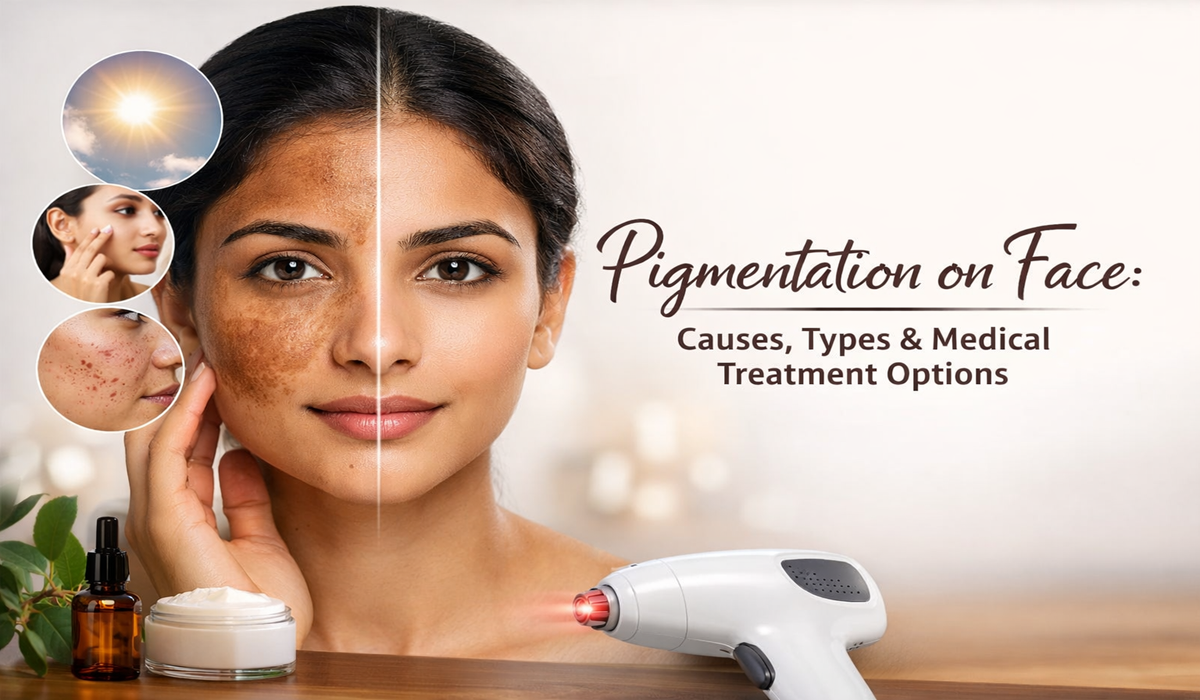
Causes of pigmentation on face is one of the most common skin concerns seen by dermatologists in India. From uneven skin tone and dark patches to stubborn marks that refuse to fade, pigmentation can affect confidence and overall skin health.
While many people try home remedies or over-the-counter creams, pigmentation is not a one-size-fits-all condition. Understanding why pigmentation occurs, what type it is, and how it should be treated medically is the key to long-lasting results.
This guide explains facial pigmentation in a clear, practical way—based on dermatological science, not myths.
What Is Facial Pigmentation?
Pigmentation occurs when the skin produces excess melanin, the pigment responsible for skin colour. When melanin production becomes uneven or excessive, it leads to dark patches, spots, or discolouration on the face.
Pigmentation can be temporary or chronic, depending on the cause and how early it is treated.
Common Causes of Pigmentation on the Face
Facial pigmentation rarely has a single cause. In most cases, it is triggered by a combination of internal and external factors.
1. Sun Exposure
Ultraviolet (UVA and UVB) rays stimulate melanin production. Prolonged or unprotected sun exposure is the leading cause of pigmentation, even in winter or on cloudy days.
2. Hormonal Changes
Hormonal imbalance during pregnancy, PCOS, thyroid disorders, or oral contraceptive use often triggers pigmentation, especially melasma.
3. Post-Inflammatory Hyperpigmentation (PIH)
Dark marks left behind after acne, burns, allergic reactions, or skin injuries fall under this category.
4. Genetics
Some people are genetically predisposed to pigmentation, especially melasma and under-eye darkness.
5. Incorrect Skincare & Self-Medication
Using steroid creams, harsh exfoliants, or unprescribed “fairness” products can worsen pigmentation and damage the skin barrier.
6. Medical Treatments Without Sun Protection
Procedures like chemical peels or laser treatments without proper sunscreen use can cause rebound pigmentation.
Types of Facial Pigmentation (Why Diagnosis Matters)
Identifying the type of pigmentation is critical because each type responds differently to treatment.
1. Melasma
Appears as symmetrical brown or grey-brown patches
Common on cheeks, forehead, upper lip
Strongly linked to hormones and sun exposure
Chronic and prone to recurrence
2. Post-Inflammatory Hyperpigmentation (PIH)
Dark spots after acne, wounds, or rashes
Colour ranges from light brown to deep black
Improves gradually with correct treatment
3. Sun Spots (Solar Lentigines)
Flat brown spots caused by long-term sun exposure
Common after 30–35 years of age
Often seen on cheeks and temples
4. Freckles
Small brown spots that darken with sun exposure
Genetic tendency
Harmless but cosmetically concerning for some
5. Under-Eye Pigmentation
Can be due to genetics, thin skin, allergies, or vascular causes
Requires careful evaluation before treatment
Why Home Remedies Often Fail
Many people rely on lemon juice, scrubs, or DIY masks. These may temporarily brighten the skin but often:
Irritate the skin barrier
Increase sensitivity to sunlight
Worsen pigmentation over time
Delay proper medical treatment
Pigmentation is a medical condition, not just a cosmetic issue.
Medical Treatment Options for Facial Pigmentation
At a dermatology clinic, pigmentation treatment is always customised, based on skin type, pigmentation depth, and cause.
1. Medical-Grade Topical Treatments
Dermatologist-prescribed creams help regulate melanin production safely.
Common actives include:
Azelaic acid
Kojic acid
Tranexamic acid
Retinoids (controlled use)
Niacinamide
These are far more effective and safer than over-the-counter fairness creams.
2. Chemical Peels
Chemical peels help remove damaged outer skin layers and improve pigmentation gradually.
Best for:
Acne marks
Mild to moderate pigmentation
Dull, uneven skin tone
Peels are selected based on skin sensitivity and pigmentation depth.
3. Laser Treatment for Pigmentation
Laser technology targets excess melanin precisely without damaging surrounding skin.
Helpful for:
Stubborn pigmentation
Sun spots
Certain types of melasma (with caution)
Laser treatments are always combined with strict sun protection.
4. Oral Medications (When Needed)
In selected cases, oral antioxidants or tranexamic acid may be prescribed to control internal triggers of pigmentation.
Role of Sunscreen in Pigmentation Treatment
No pigmentation treatment works without daily sunscreen use.
Dermatologists recommend:
Broad-spectrum sunscreen (UVA + UVB)
SPF 30 or higher
Reapplication every 3–4 hours if outdoors
Skipping sunscreen is the most common reason pigmentation treatments fail.
How Long Does Pigmentation Treatment Take?
Pigmentation improves gradually. Depending on severity:
Mild pigmentation: 6–8 weeks
Moderate pigmentation: 3–4 months
Melasma or chronic pigmentation: Long-term maintenance
Consistency matters more than speed.
When Should You See a Dermatologist?
Consult a skin specialist if:
Pigmentation is spreading or darkening
Home remedies haven’t worked
Skin burns or reacts easily
Pigmentation worsens after treatments
You are pregnant or planning pregnancy
Early diagnosis prevents long-term damage.
How Atomic Clinic Approaches Pigmentation Treatment
At Atomic Clinic, pigmentation is treated with a medical-first approach, not cosmetic shortcuts.
Detailed skin analysis
Identification of pigmentation type
Combination treatment plans
Dermatologist-supervised procedures
Emphasis on long-term prevention
Each patient receives a personalised plan rather than a generic solution.
Final Thoughts
Facial pigmentation is common, but it is also treatable with the right medical guidance. Understanding the cause, identifying the type, and following a dermatologist-led treatment plan can significantly improve skin clarity and confidence.
Pigmentation does not fade overnight—but with patience, consistency, and expert care, healthy and even-toned skin is achievable.