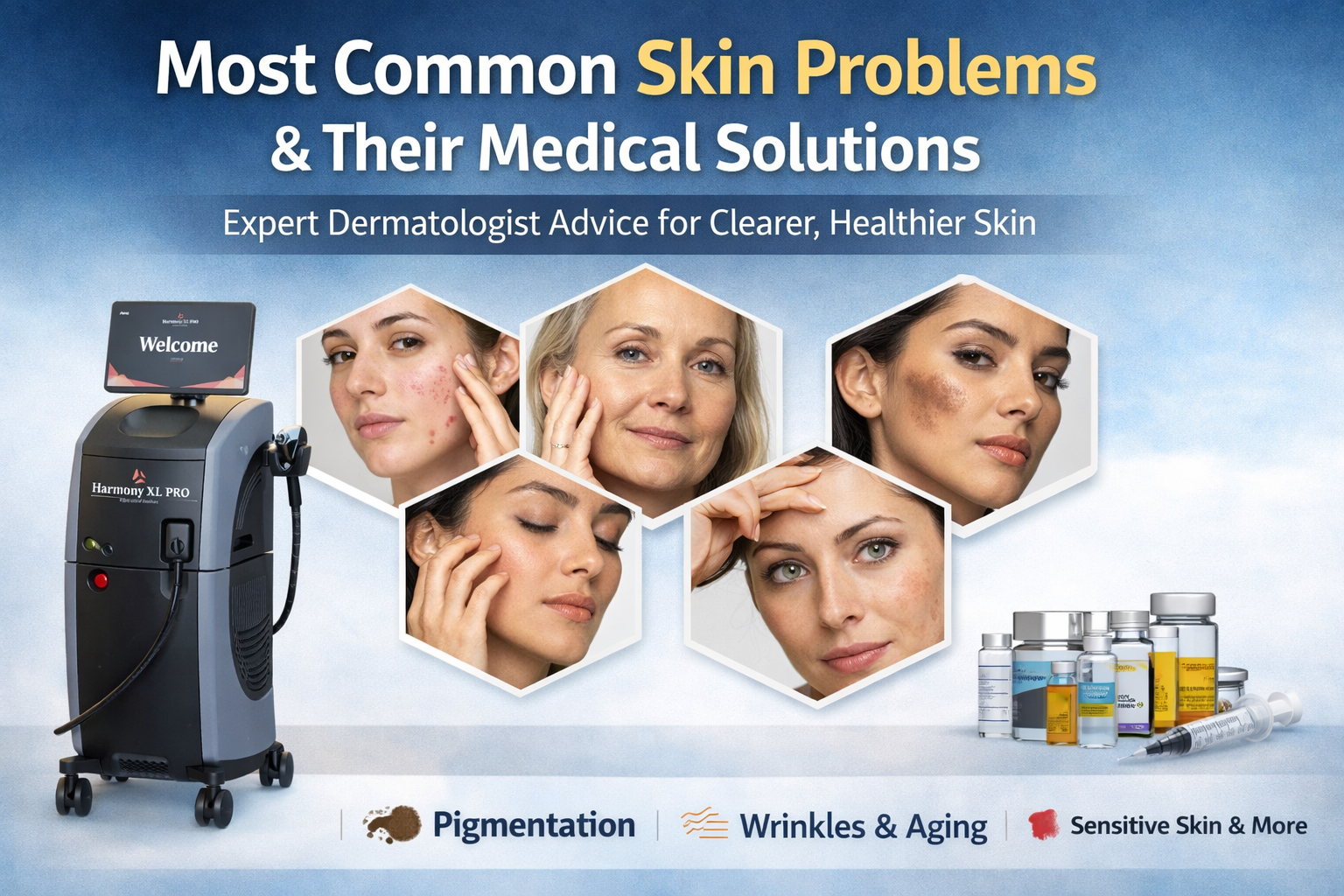
Most Common Skin Problems People Face Today and Their Medical Solutions

Skin problems are no longer occasional concerns limited to teenagers or individuals with specific medical conditions. Today, people across all age groups experience persistent skin issues that affect not only their appearance but also their confidence and emotional well-being. Environmental pollution, chronic stress, hormonal fluctuations, irregular sleep patterns, dietary imbalances, and prolonged sun exposure have significantly changed the way our skin behaves.
In clinical practice, one common pattern stands out: many patients try to manage their skin problems independently before consulting a dermatologist. They experiment with trending skincare products, social media advice, or over-the-counter solutions hoping for fast results. While some may notice temporary improvement, many eventually develop irritation, increased sensitivity, or worsening pigmentation. The reality is that most skin conditions require proper medical evaluation and a structured, individualized treatment plan.
Let us explore the most common skin problems people face today and the medical solutions that offer safe and long-term results.
Acne and Acne Scarring
Acne remains one of the most frequently treated skin conditions worldwide. While it is often associated with adolescence, adult acne is increasingly common. Hormonal imbalances, stress, cosmetic misuse, excessive oil production, dietary triggers, and environmental pollution all contribute to breakouts.
In more severe cases, patients develop painful cystic acne that leads to long-term scarring and dark spots. Acne management is not simply about drying out pimples. Effective treatment requires identifying triggers, controlling inflammation, regulating oil production, and preventing recurrence.
Dermatologist-guided treatments may include prescription topical medications, oral therapies when necessary, chemical peels, laser treatments, and medical-grade skincare routines. Early medical intervention significantly reduces the risk of permanent scarring and stubborn post-acne pigmentation.
Pigmentation and Uneven Skin Tone
Pigmentation disorders are particularly common in individuals with medium to darker skin tones due to higher melanin activity. Conditions such as melasma, sunspots, tanning, and post-inflammatory hyperpigmentation frequently bring patients to dermatology clinics.
Hormonal fluctuations, UV exposure, inflammation, and inappropriate skincare products can worsen pigmentation. Many patients unknowingly damage their skin barrier by using harsh fairness creams or strong exfoliating agents without professional guidance.
A safe and effective medical approach begins with identifying the root cause. Dermatologists may recommend medical-grade chemical peels, laser toning procedures, brightening treatments, and customized skincare regimens. Strict sun protection is an essential part of pigmentation management, as even minimal sun exposure can reverse treatment progress.
Dull Skin and Uneven Texture
Dullness is often described as skin that looks tired, rough, or lifeless. While it may appear to be a minor cosmetic issue, it usually reflects dehydration, improper exfoliation, buildup of dead skin cells, or environmental damage.
Pollution particles and excess oil can accumulate on the skin surface, reducing clarity and glow. Professional treatments such as hydrating therapies, medi-facials, and gentle resurfacing procedures help remove dead skin cells and stimulate healthy circulation.
However, lasting improvement depends on consistent home care. Proper cleansing, hydration, balanced nutrition, and daily sunscreen application play an equally important role in restoring and maintaining skin radiance.
Sensitive and Reactive Skin
An increasing number of patients report redness, burning sensations, itching, or sudden breakouts after using new skincare products. The rise in highly active ingredients has contributed to barrier damage in many individuals.
Sensitive skin may also be associated with dermatological conditions such as rosacea or contact dermatitis. Treatment focuses first on calming inflammation and repairing the skin barrier. Dermatologists often advise simplifying skincare routines and introducing soothing, barrier-repair formulations.
Aggressive procedures are avoided until the skin regains stability. Long-term management includes educating patients about ingredient awareness and avoiding unnecessary product layering.
Premature Ageing
Fine lines, early wrinkles, and mild skin laxity are now observed in younger age groups. Chronic sun exposure, stress, lack of sleep, and increased screen time accelerate collagen breakdown.
Many individuals seek anti-ageing treatments expecting dramatic results, but responsible dermatology emphasizes natural, gradual improvement. Medical anti-ageing treatments aim to stimulate collagen production, improve elasticity, and maintain skin health without altering facial expressions.
Options may include collagen-boosting therapies, skin rejuvenation procedures, and preventive dermatology treatments. Preventive care often produces better outcomes than corrective treatments later in life.
Enlarged Pores and Oily Skin
Enlarged pores and excessive oil production are common concerns, particularly in humid climates. Although pores cannot be permanently eliminated, their appearance can be significantly reduced with appropriate treatment.
Oily skin should not be over-dried, as this can increase sebum production. Dermatologist-recommended solutions may include chemical peels, laser-based procedures, and tailored skincare regimens designed to balance oil without damaging the skin barrier.
Hair and Scalp Concerns
Scalp health is an integral part of dermatology. Hair thinning, dandruff, and scalp inflammation are frequently reported concerns. Stress, hormonal imbalance, nutritional deficiencies, and environmental exposure all contribute to hair-related issues.
A professional evaluation determines whether the problem is temporary or requires structured treatment. Solutions may include medical scalp therapies, PRP treatments, nutritional correction, and prescription medications when necessary.
The Importance of Professional Evaluation
Visible skin symptoms often reflect deeper underlying causes. Lifestyle factors such as diet, hydration, stress, and sleep significantly influence skin health. Without addressing these aspects, even advanced treatments may provide only temporary results.
A dermatology consultation includes a detailed skin assessment, medical history review, and evaluation of hormonal and environmental influences. Based on this assessment, a customized treatment plan is created combining in-clinic procedures and home-care recommendations.
Safety is paramount. Procedures must be performed under professional supervision using approved technology and evidence-based protocols. Unregulated treatments can result in burns, scarring, and worsening pigmentation.
A Long-Term Approach to Healthy Skin
Healthy skin is not achieved through quick fixes. It requires patience, consistency, and medically guided care. With early diagnosis and personalized treatment, most skin problems can be managed effectively.
Instead of relying on unverified trends, seeking professional evaluation ensures safer outcomes, predictable results, and long-term skin stability. Clearer, healthier skin is achievable when guided by expertise and supported by disciplined care.