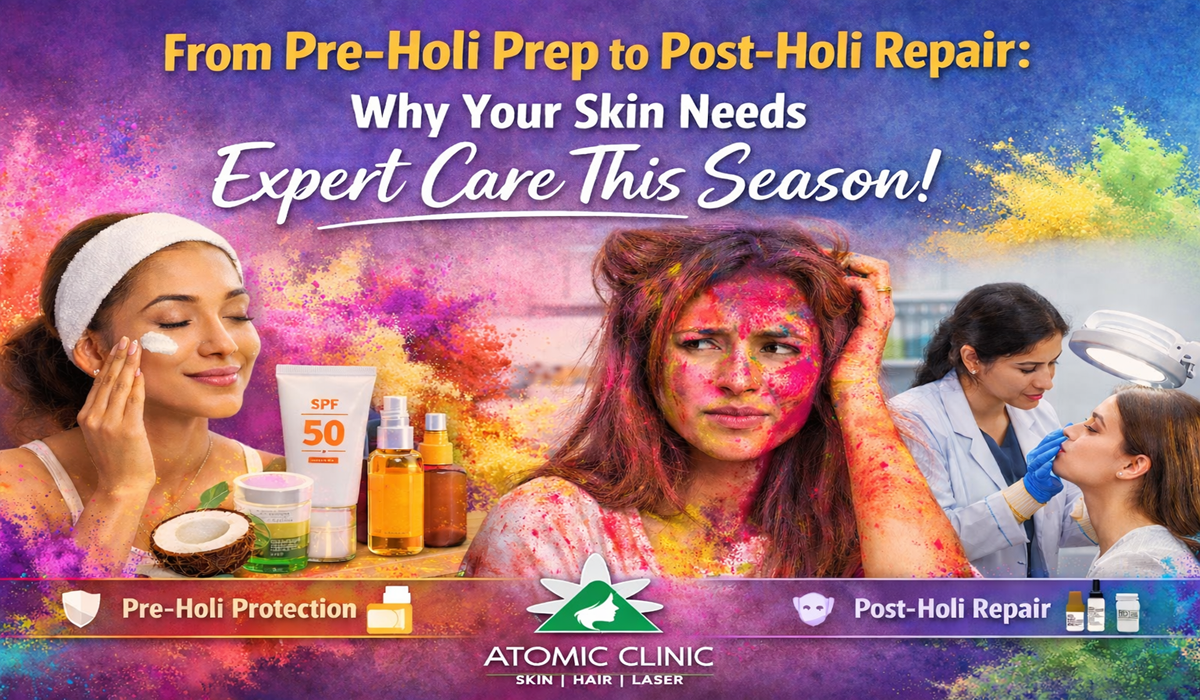
From Pre-Holi Prep to Post-Holi Repair: Why Your Skin Needs Expert Care This Season

Holi is one of the most joyful festivals of the year, but your skin often pays the price. That’s why following the right Pre Holi and Post Holi skincare tips is essential to protect your skin from harsh colors, sun exposure, and dryness. With a little preparation before the celebrations and proper care afterward, you can enjoy the festival without worrying about breakouts, irritation, or dullness.
Every year, in the week following Holi, there is a noticeable rise in patients visiting us with:
- Sudden acne flare-ups
- Allergic rashes
- Stubborn tanning
- Patchy pigmentation
- Excessive hair fall
- Scalp irritation
At Atomic Clinic, many of these cases could have been minimized with proper pre-Holi preparation and corrected early with the right post-Holi care.
Let’s understand what actually happens to your skin and hair during Holi — and how to protect them properly.
What Holi Colors Really Do to Your Skin
Most commercial Holi colors contain:
- Synthetic dyes
- Industrial pigments
- Heavy metals
- Alkaline substances
These ingredients disrupt your skin barrier, which is the outermost protective layer. Once this barrier is compromised:
- Irritation increases
- Water loss increases
- Pigmentation risk rises
- Acne becomes more likely
People with sensitive skin, rosacea, eczema, or acne-prone skin are especially vulnerable.
Pre-Holi Skin Prep: Strengthen Before Exposure
Think of it like preparing your skin for controlled stress.
1. Repair and Hydrate the Barrier
Five to seven days before Holi:
- Use a ceramide-based moisturizer twice daily.
- Avoid starting retinol, exfoliating acids, or new active treatments.
- Increase water intake.
A well-hydrated barrier is more resistant to chemical penetration.
If you already struggle with pigmentation or acne, a quick pre-Holi consultation can help adjust your routine safely.
2. Sunscreen Is Not Optional
Holi is usually played outdoors. UV radiation combined with synthetic dyes increases melanocyte stimulation — which means more tanning and uneven pigmentation.
Use:
- Broad spectrum SPF 50
- Apply 20 minutes before sun exposure
- Reapply every 2–3 hours if outdoors
Pigmentation after Holi often takes months to treat. Prevention is far easier.
What to Avoid Before Holi (5–7 Days Prior)
To keep your skin barrier strong, it’s important to change your routine a little bit:
- Stop strong active ingredients such as retinol, AHA, BHA, or PHA.
These ingredients increase skin sensitivity and make your skin more vulnerable to irritation and pigmentation during Holi. - Postpone aesthetic procedures like chemical peels, laser sessions, or aggressive facials.
Recently treated skin is more reactive and prone to redness or damage when exposed to colors and sunlight. - Avoid harsh, detergent-based cleansers or physical exfoliants.
Over-cleansing or scrubbing weakens your protective barrier, increasing the risk of post-Holi inflammation.
Giving your skin a short “rest period” before Holi helps it stay resilient and less reactive during the celebrations.
3. Create a Protective Moisture Layer
Apply a generous layer of moisturizer to:
- Face
- Neck
- Arms
- Legs
This reduces color penetration and makes removal easier later.
Oily skin types often skip moisturizer before Holi, which actually increases irritation risk.
Pre-Holi Hair Care: Protect the Scalp
The scalp is skin too — and often neglected.
Apply coconut or argan oil generously to:
- Scalp
- Hair length
This reduces:
- Chemical absorption
- Protein loss
- Cuticle damage
Tie your hair to limit exposure.
Patients with pre-existing hair fall conditions should be especially cautious, as post-Holi shedding can temporarily increase due to inflammation.
During Holi: Small Habits, Big Difference
Avoid:
- Excessive rubbing
- Hard scrubbing
- Repeated washing with harsh soaps
Mechanical friction causes micro-injury to the skin, which later appears as hyperpigmentation.
Choose organic colors when possible and limit sun exposure.
Post-Holi Skin Repair: What Most People Do Wrong
The biggest mistake? Aggressive scrubbing.
Scrubbing strips already damaged skin further, leading to:
- Redness
- Burning sensation
- Post-inflammatory pigmentation
Instead:
- Use cleansing oil or micellar water first.
- Follow with a gentle cleanser.
- Pat dry — don’t rub.
If color persists, allow gradual fading. Do not experiment with lemon, baking soda, or toothpaste.
When to See a Dermatologist After Holi
Seek professional care if you notice:
- Persistent itching
- Red patches
- Sudden acne breakout
- Uneven dark patches
- Increased hair fall lasting more than 2 weeks
At Atomic Clinic, we customize post-Holi treatments based on skin sensitivity and damage severity.
Under the supervision of Dr. Sneha Gupta, treatment protocols may include:
- Barrier repair therapy
- Anti-inflammatory medication
- Mild chemical peels (after stabilization)
- Hydration facials
- Scalp revitalization therapy
Early intervention prevents long-term pigmentation and chronic irritation.
Post-Holi Hair Recovery: Restore Balance
After washing out colors:
- Use sulfate-free shampoo
- Apply deep conditioning mask
- Avoid heat styling for a week
If scalp feels itchy or flaky, it may indicate contact dermatitis.
Professional scalp treatments can calm inflammation and reduce post-Holi shedding.
Why Expert Care Matters More Than DIY Remedies
Home remedies often:
- Worsen irritation
- Delay proper treatment
- Increase pigmentation risk
Skin after chemical exposure is vulnerable. Medical supervision ensures treatment is:
- Safe
- Targeted
- Based on skin type
That is why seasonal skin assessment is recommended, especially for patients with pre-existing skin conditions.
A Balanced Approach: Celebrate Without Compromise
Holi should not mean weeks of skin correction afterward.
With:
- Proper pre-Holi preparation
- Smart festival habits
- Gentle post-Holi recovery
- Timely dermatology care
You can enjoy the celebration without long-term damage.
Frequently Asked Questions
1. How long does Holi tanning last?
If untreated, tanning may last 4–8 weeks. Early dermatological care can shorten recovery time.
2. Is it safe to do chemical peels immediately after Holi?
No. Skin should stabilize first. Peels are done only after inflammation subsides.
3. Why does hair fall increase after Holi?
Chemical irritation and scalp inflammation can temporarily increase shedding.
4. Can pigmentation from Holi become permanent?
If ignored and repeatedly irritated, post-inflammatory pigmentation can become persistent.
This Holi season, give your skin the professional care it deserves.
Book Now your pre-Holi or post-Holi consultation at Atomic Clinic and celebrate colors the safe way.